A French infantry officers sabre featuring a 'rolling guard', sometimes called an 'attack hilt'. The steel guard as two parts, one of which, pivoting, passes from the “normal port” position to the “fight” position by simple rotation of 90°. The locking in position is done by a simple lug mechanism, here perfectly functional.
The sabre is inscribed 'Goze Fourbisseur a Metz' along the back-edge. Goze was a well-known French sword maker and mounter in the City of Metz from before 1792 until 1814. The hilt is decorated by flattened ribbon like bars with scalloped borders. With a wire-bound leather-covered grip. Overall a clean blade with a few age related marks.
This style of guard was popular in pre-revolutionary France from 1784 to 1798. Probably because it presents a flatter, less obtrusive profile when sheathed. It rapidly fell out of favor towards the end of the 1700's as nations began to introduce their own standard patterns or models

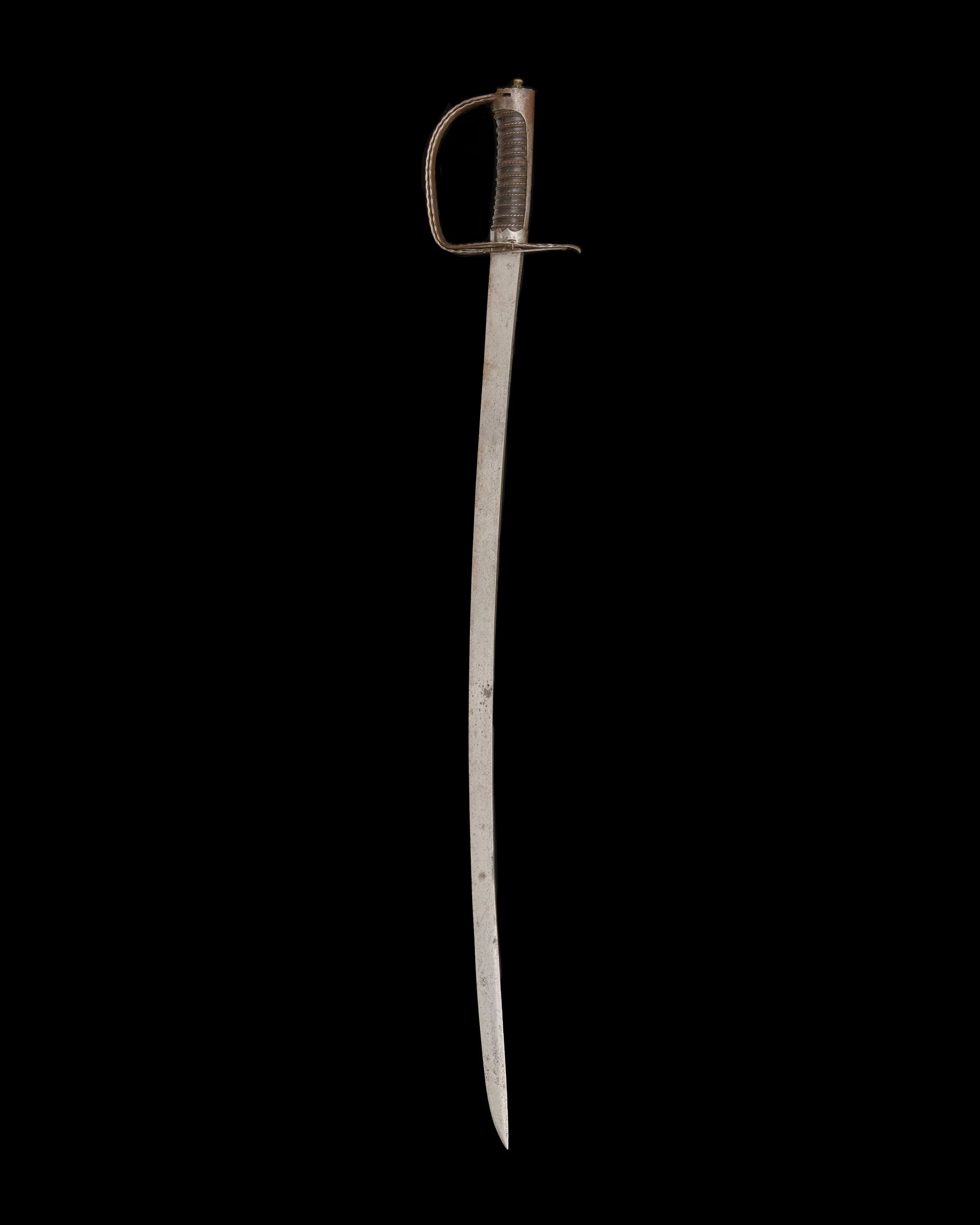 Image 1 of 7
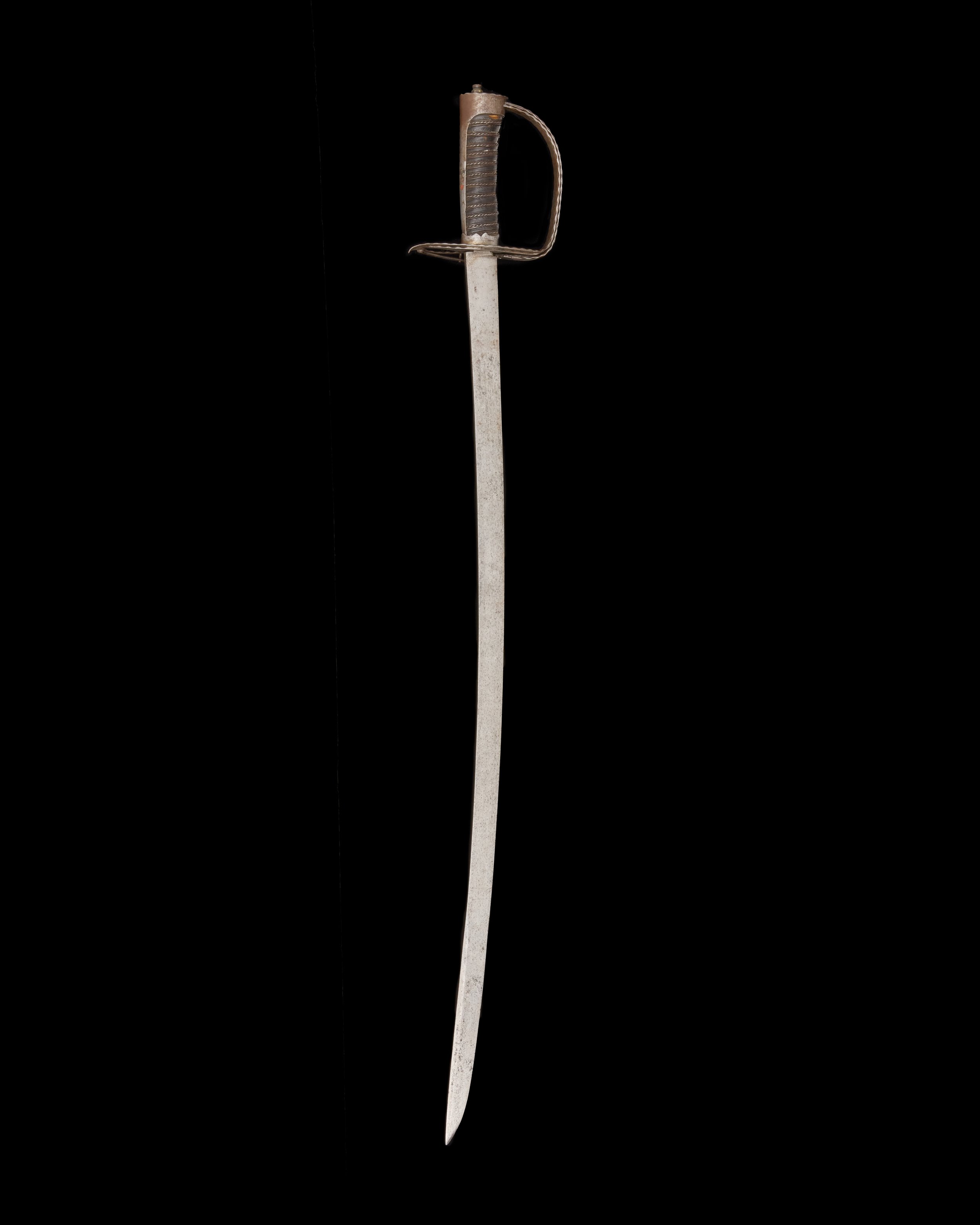 Image 2 of 7
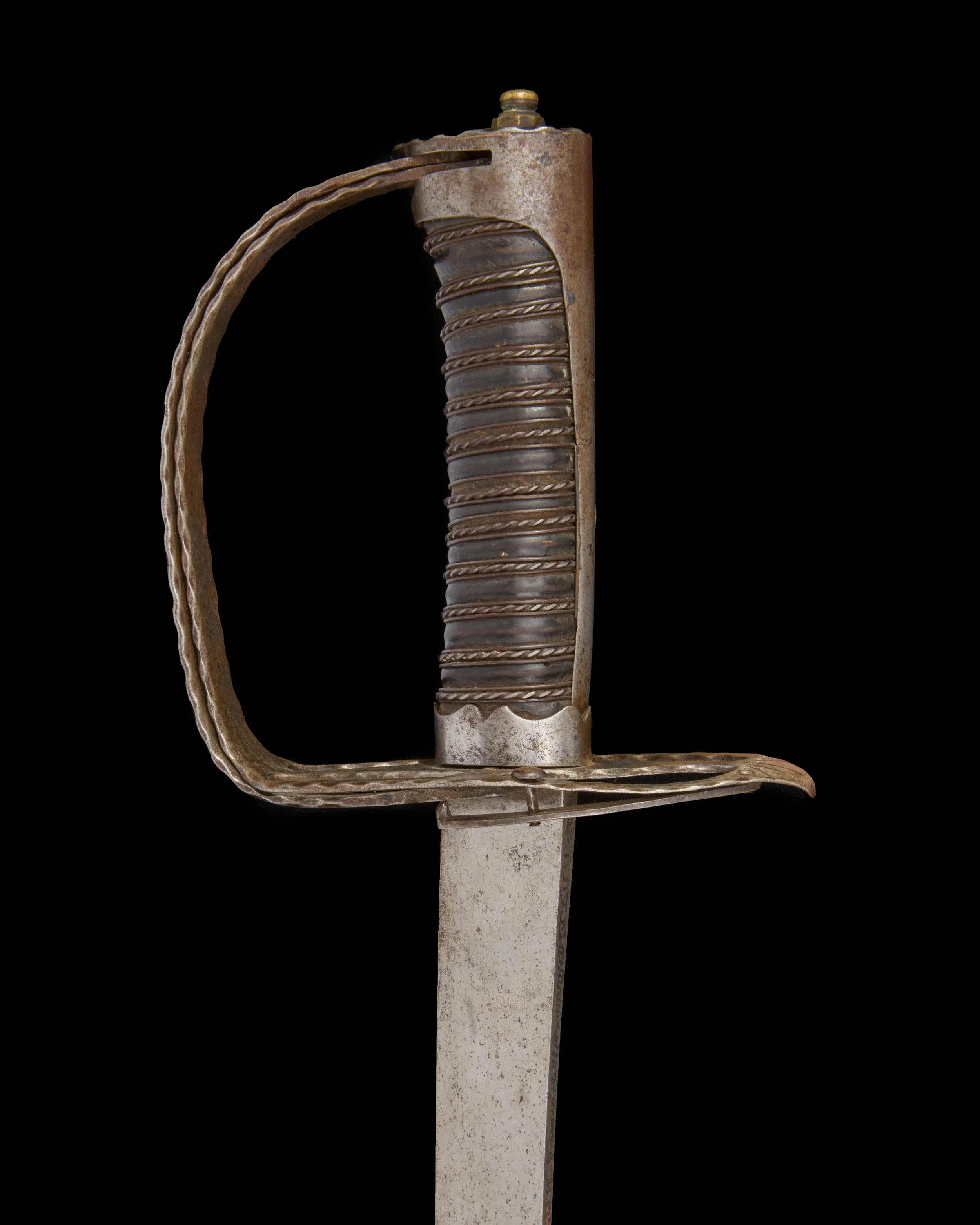 Image 3 of 7
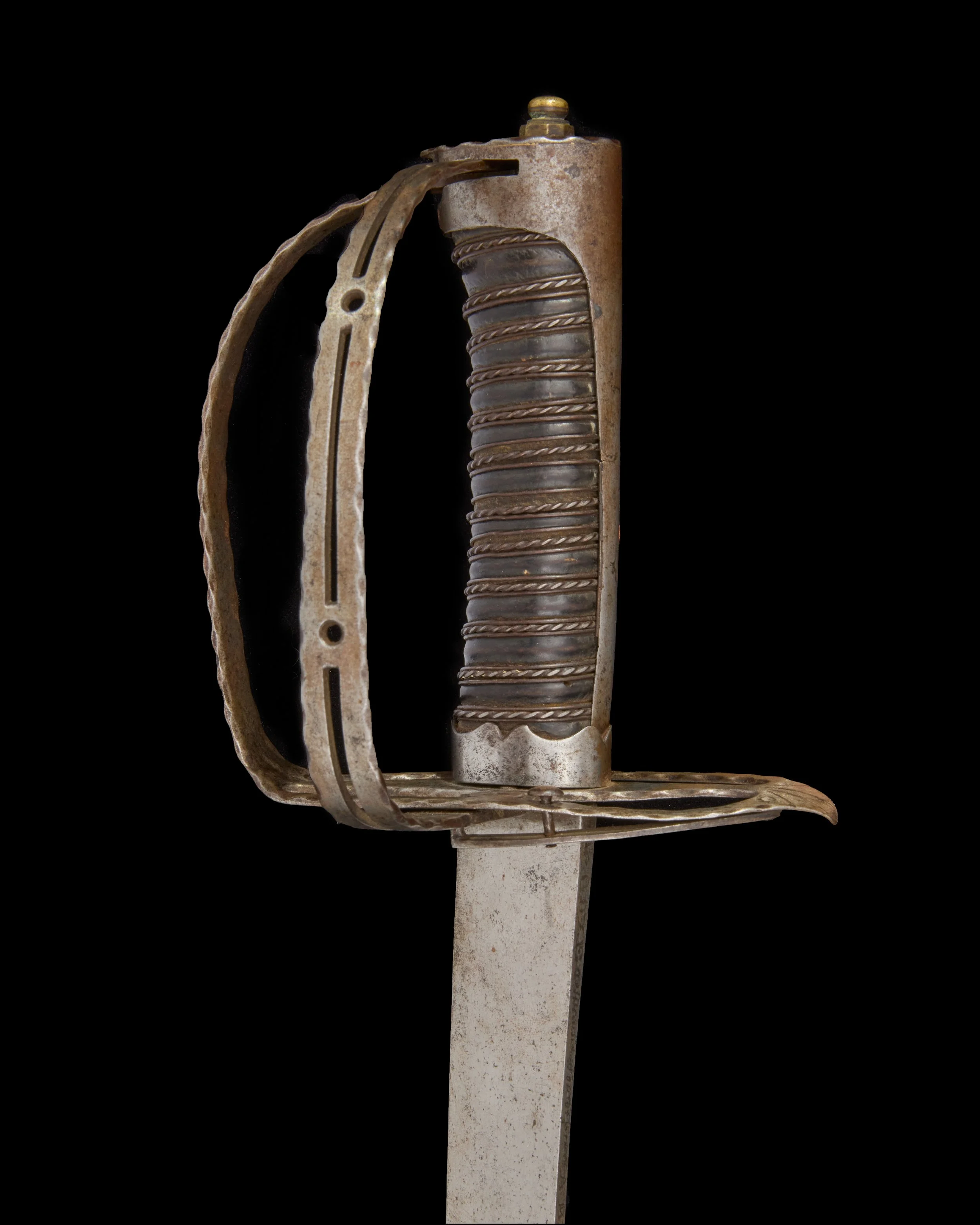 Image 4 of 7
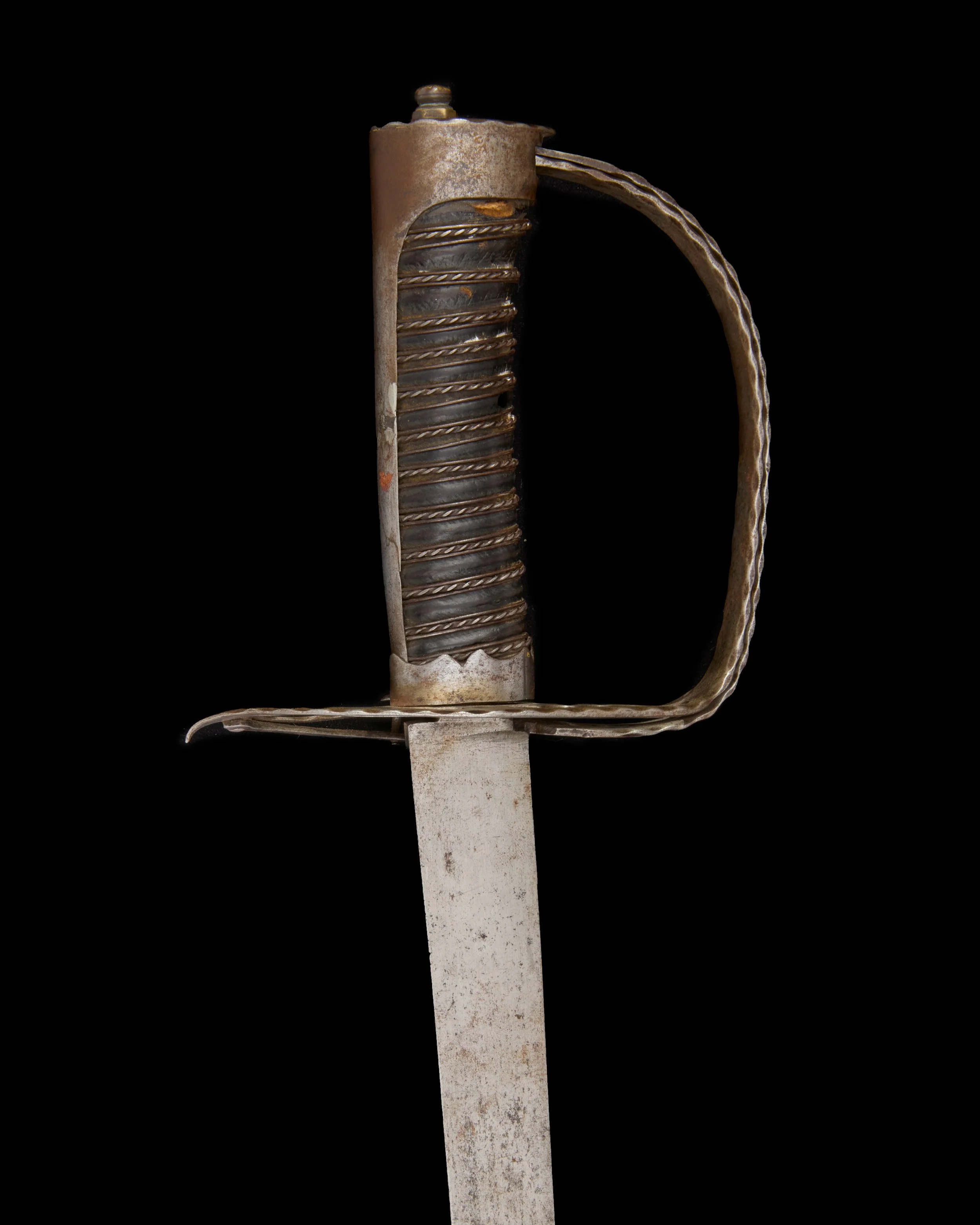 Image 5 of 7
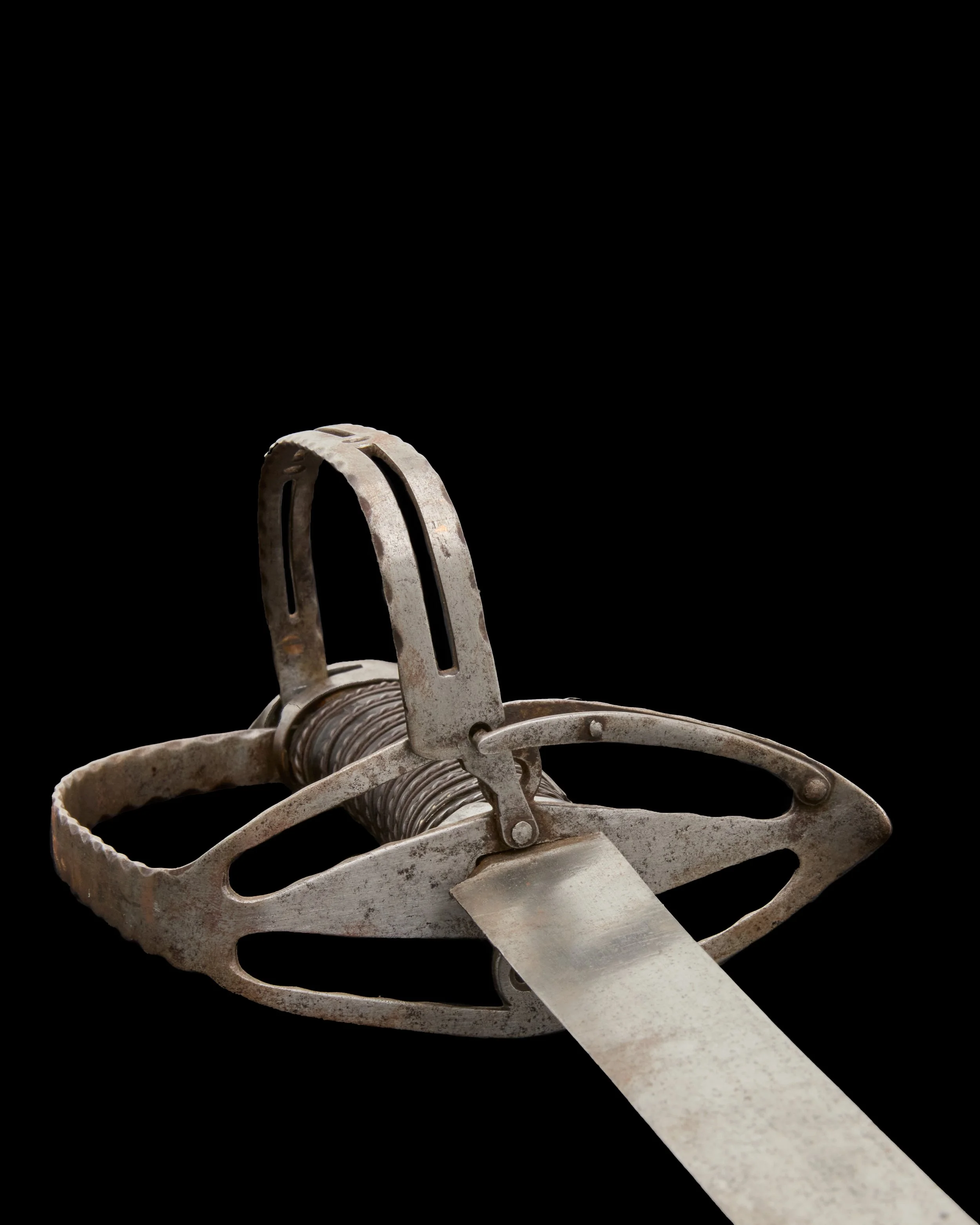 Image 6 of 7
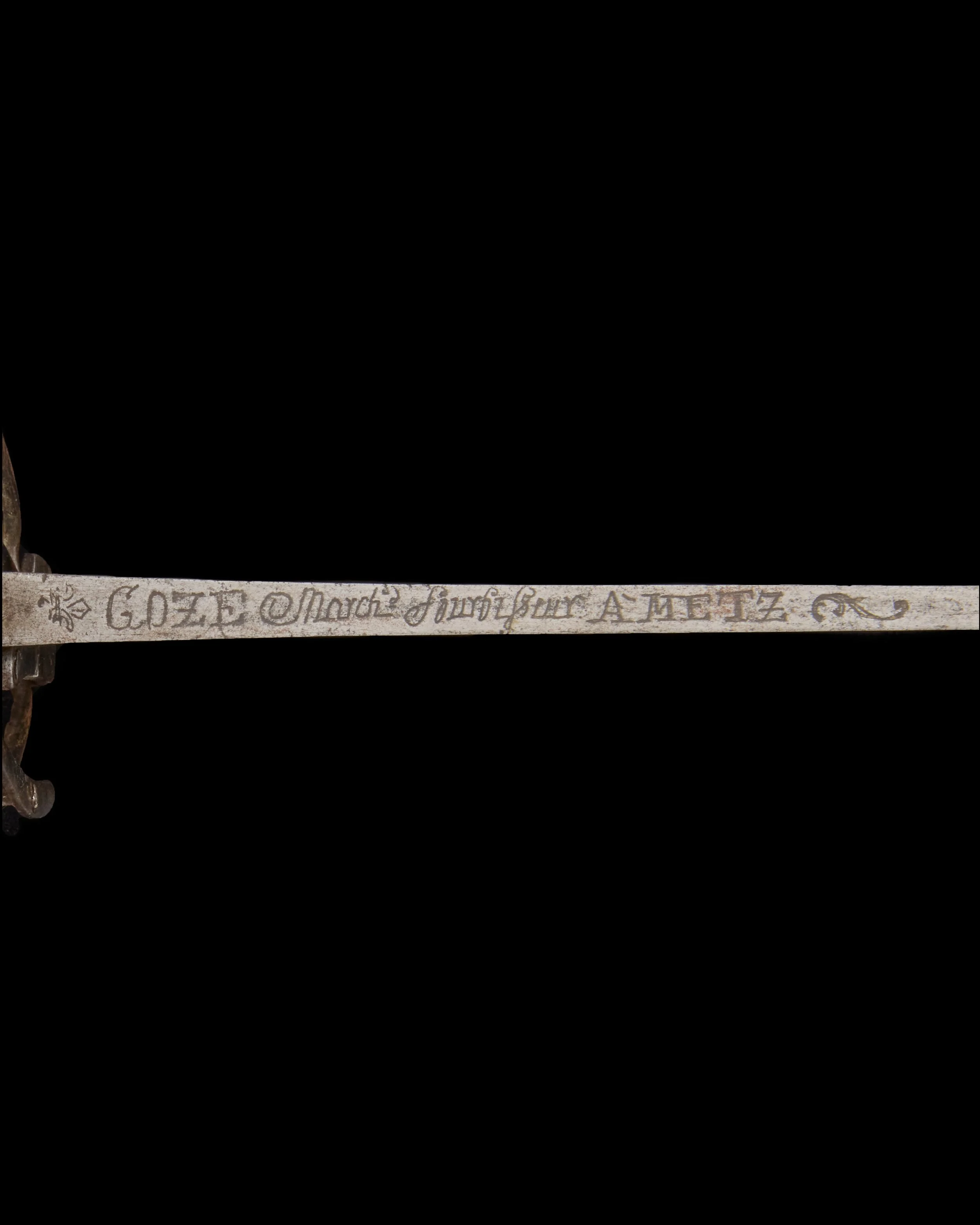 Image 7 of 7