A large solid example of the popular British 1803 Flank Offices sabre. Engraved on the spine J Runkel Solingen. It has the distinctive lion headed pommel and brass guard with GR cypher. The long fullered blade has a speckled overall patina and is solid in the guard with no movement, the engraving still retains the gold leaf. The grip still has its original shagreen and brass wire cover.
Officially in 1803, when 'a Pattern Sword for the Officers of Grenadiers and Light Infantry' was authorised. Similar in shape and style to the sword carried by light cavalry officers, it still retained a remarkable amount of regimental differences. It was designed to be a more robust fighting sword for officers of the elite flank companies of British regiments. These sabres proved to be incredibly popular, and remained in service until 1822, when they were eventually replaced by a more standard pattern.

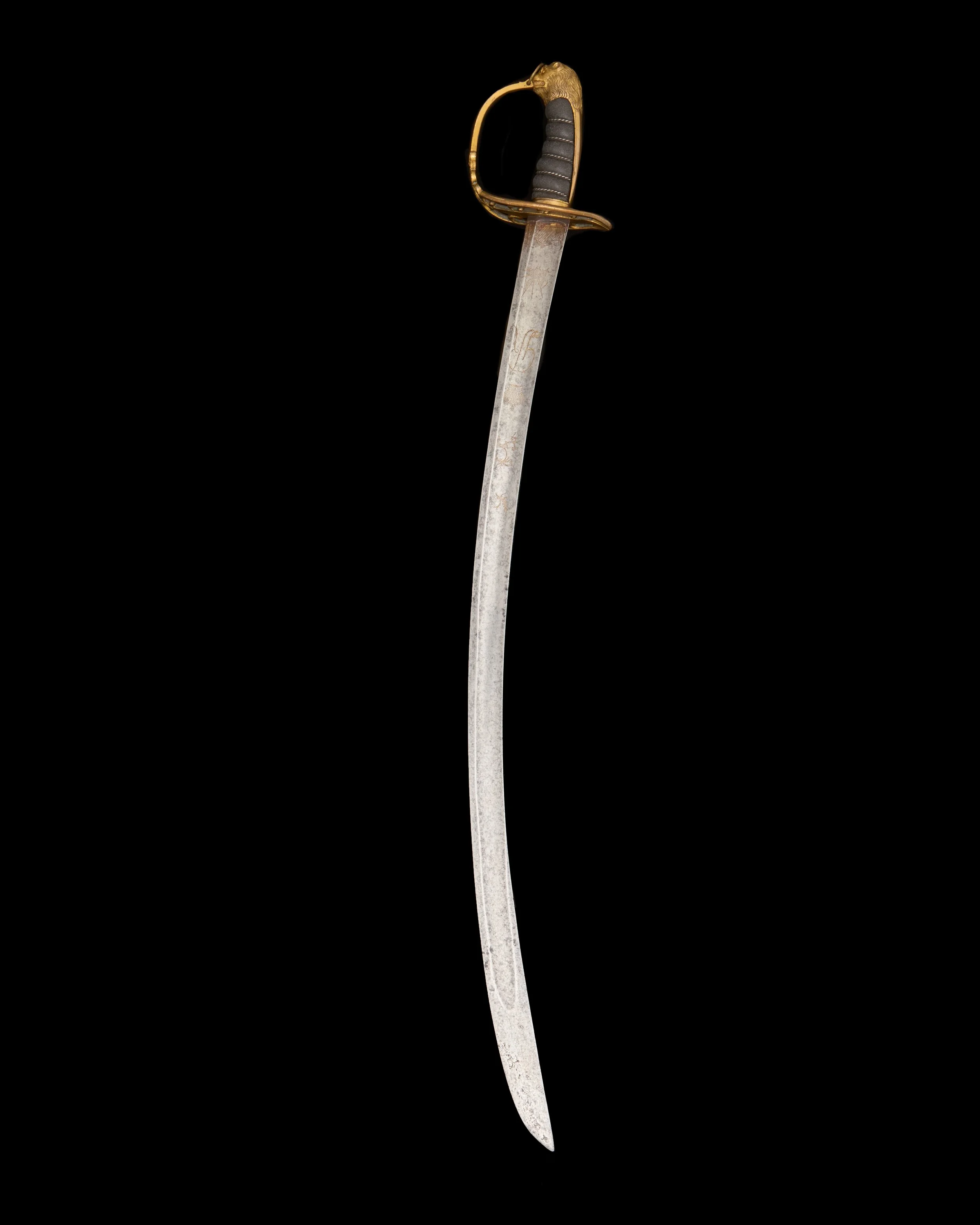 Image 1 of 7
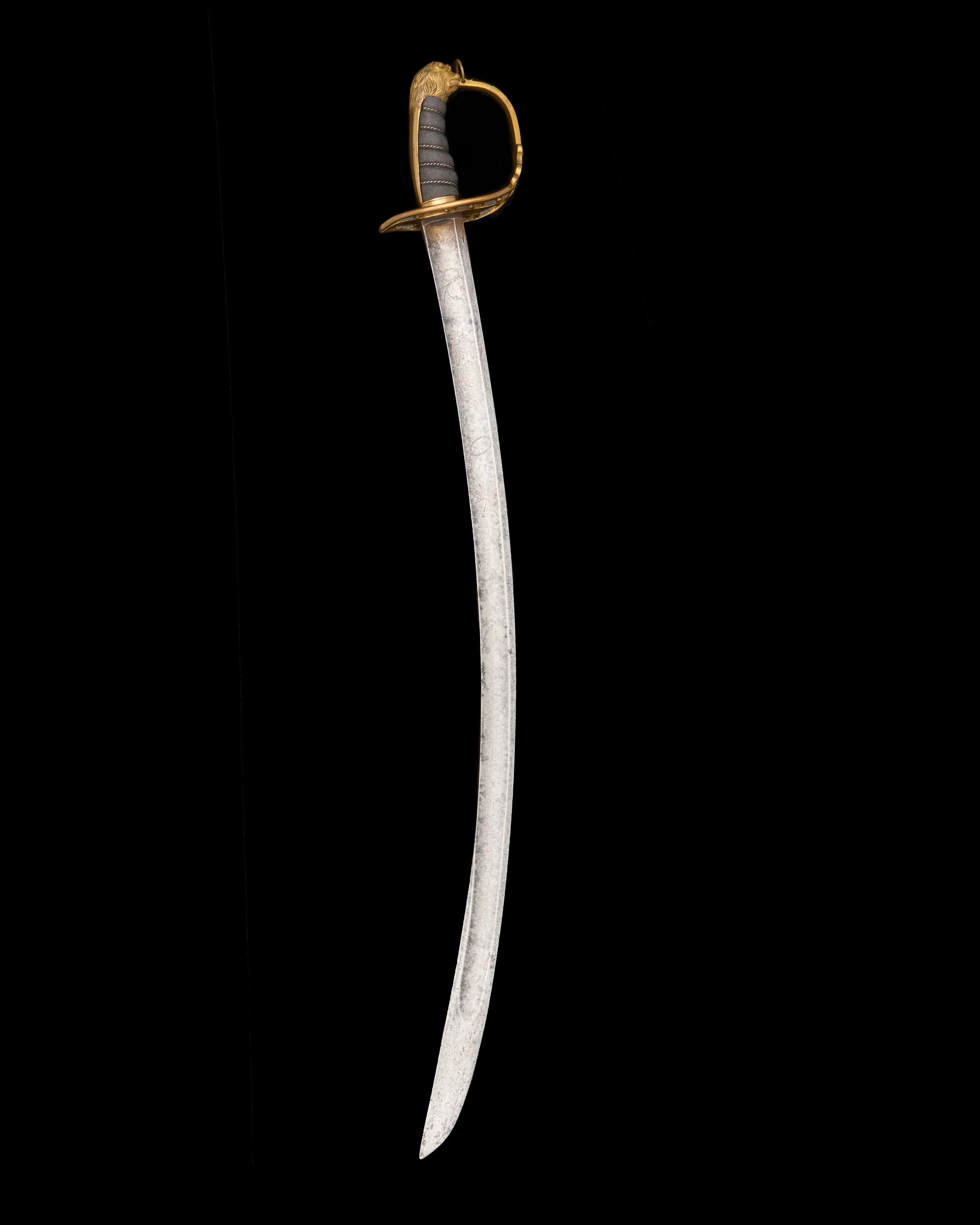 Image 2 of 7
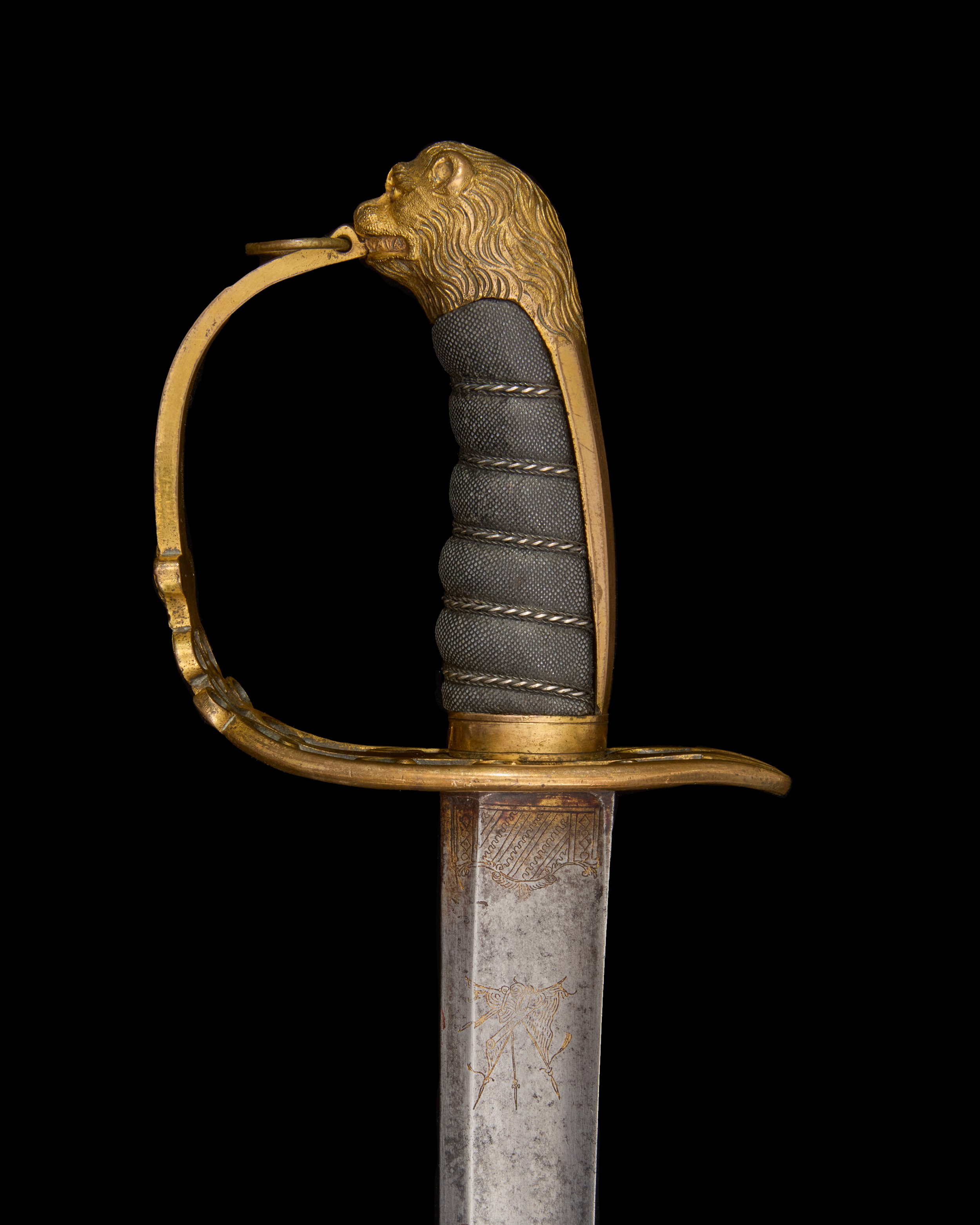 Image 3 of 7
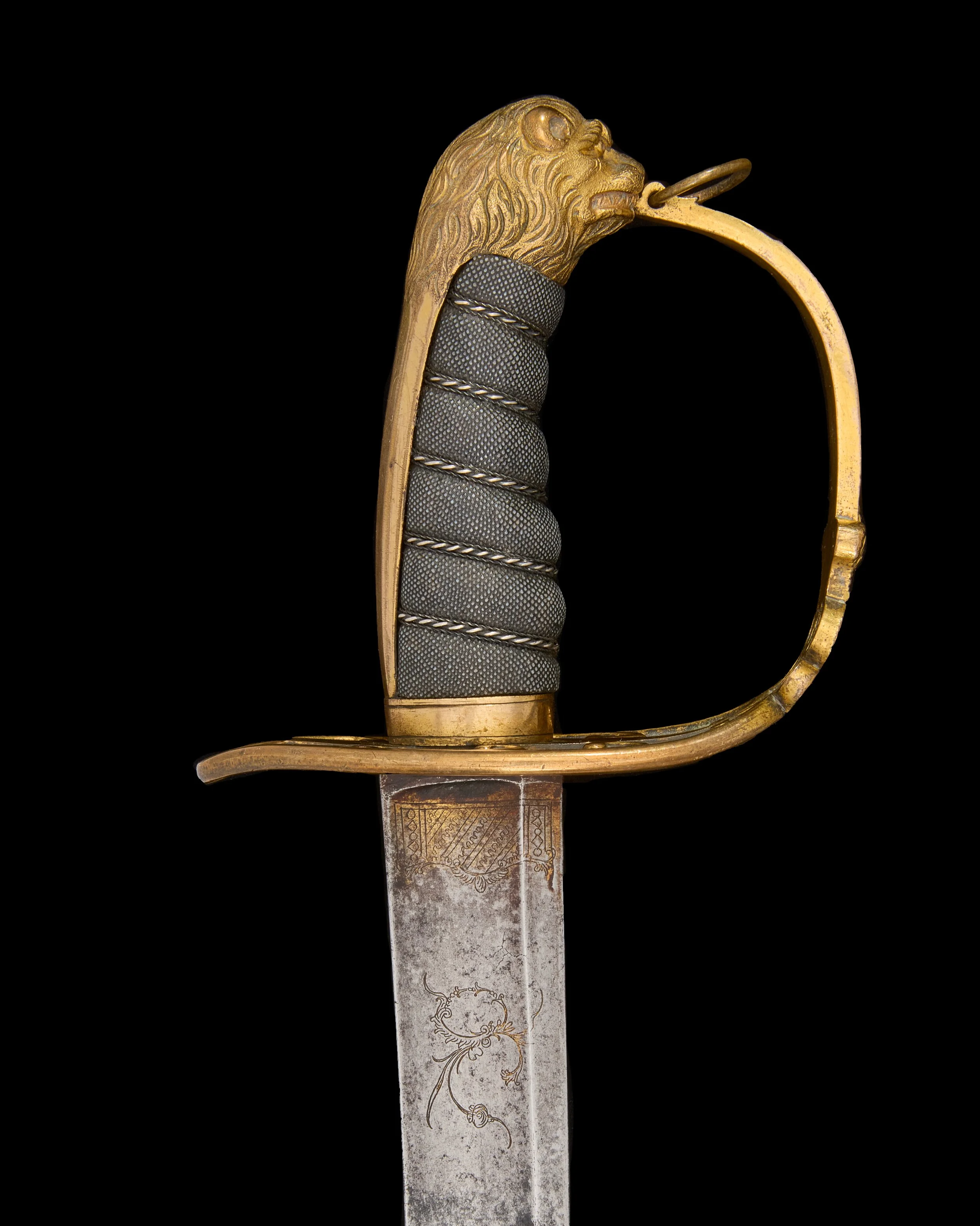 Image 4 of 7
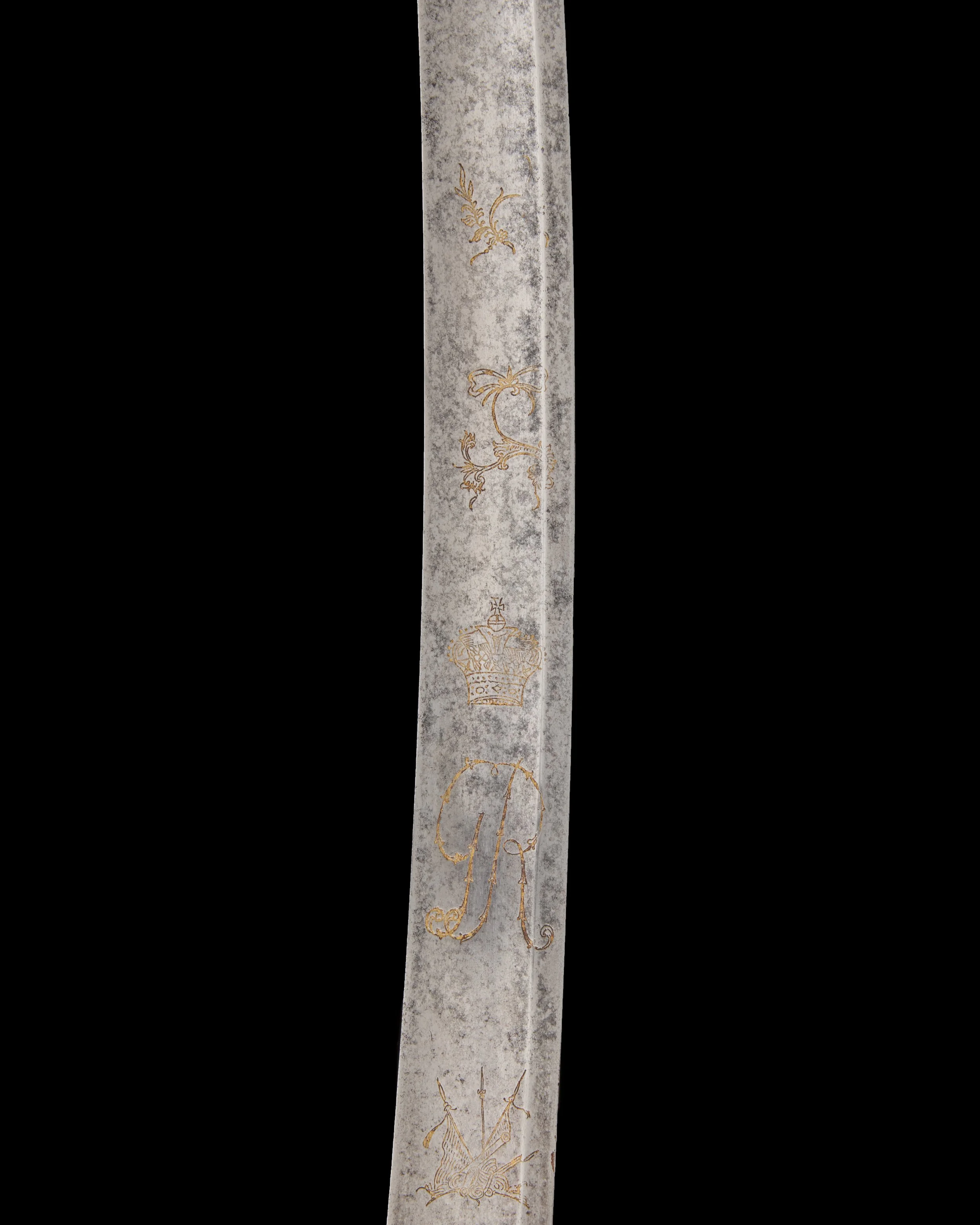 Image 5 of 7
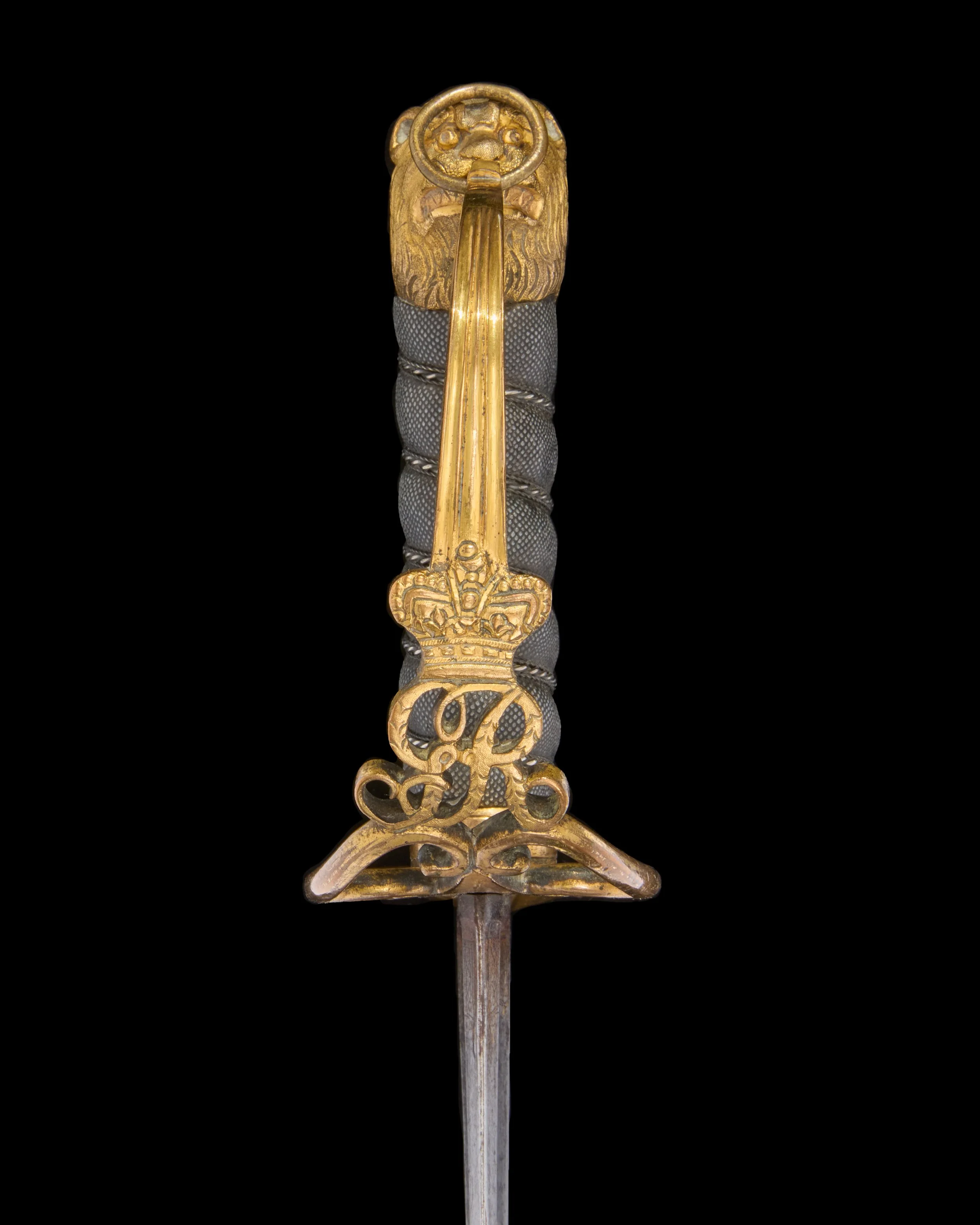 Image 6 of 7
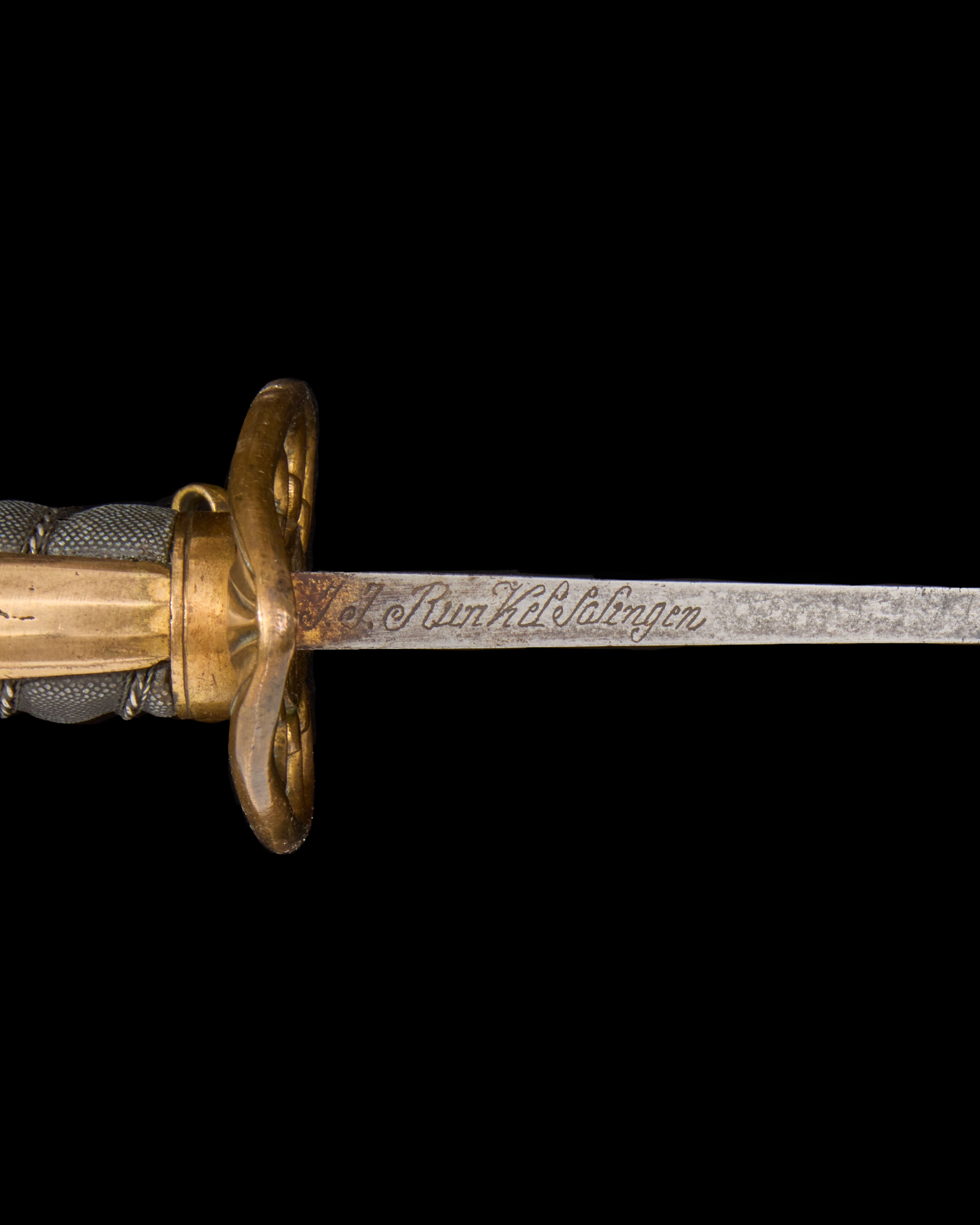 Image 7 of 7