
 Image 1 of 5
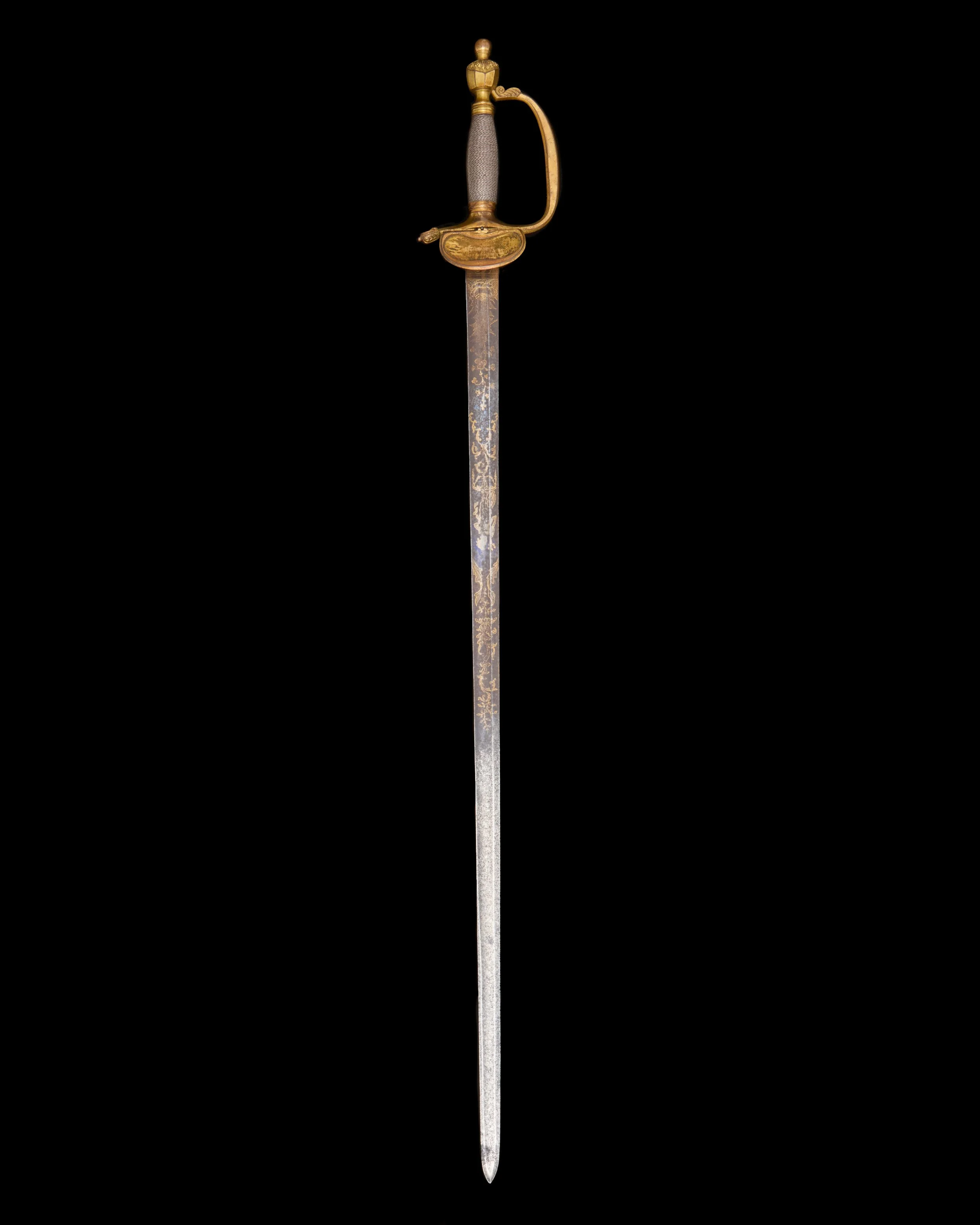 Image 2 of 5
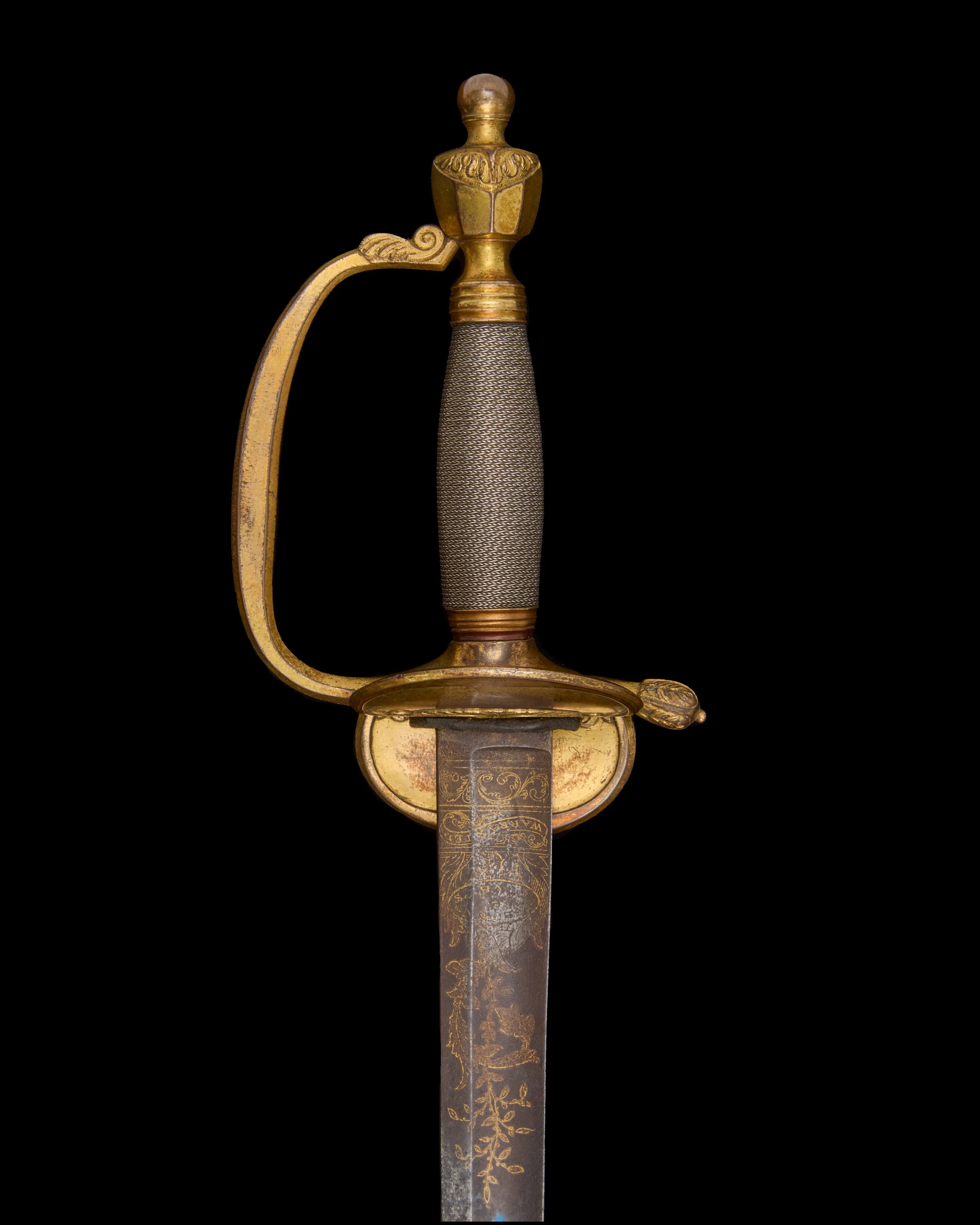 Image 3 of 5
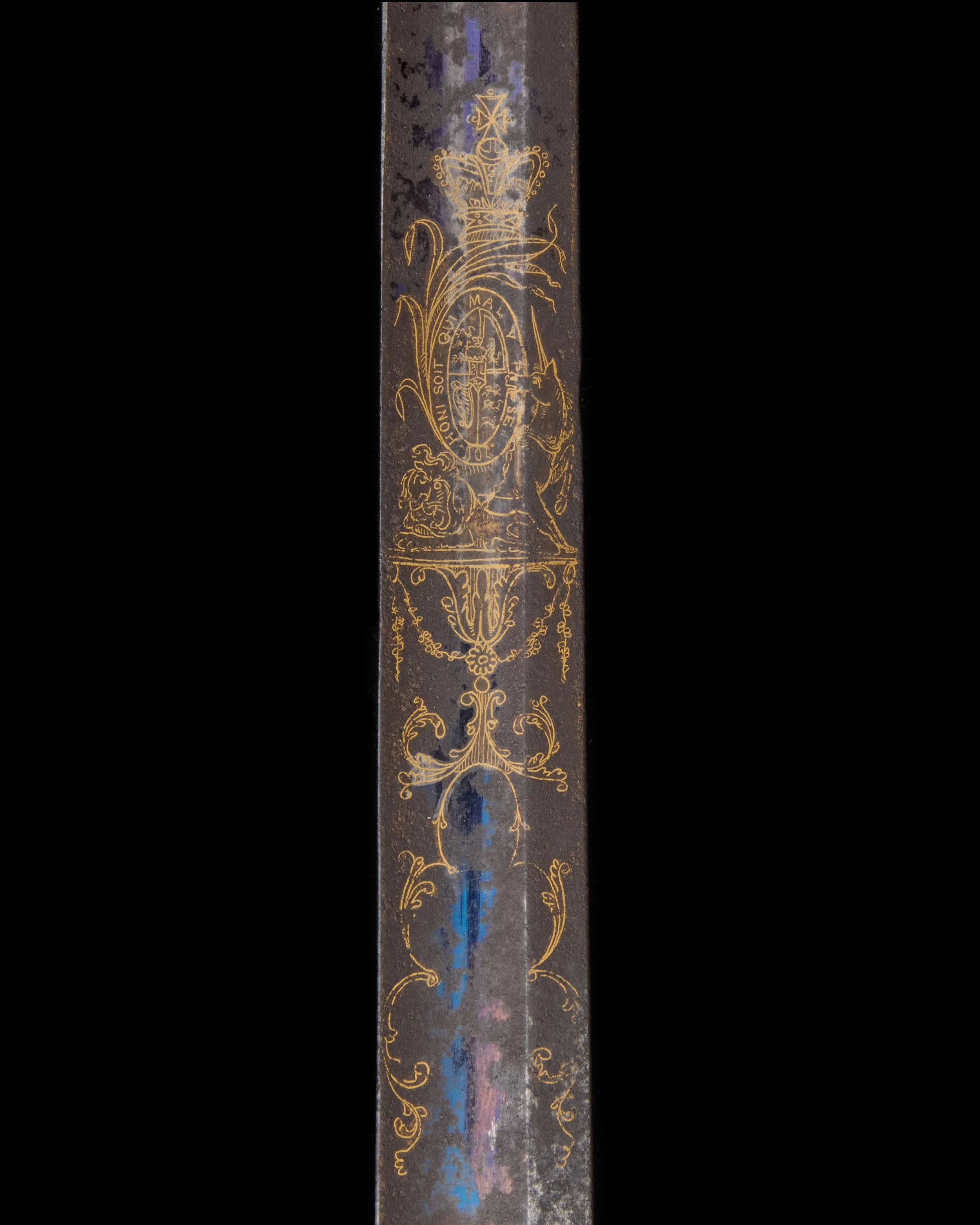 Image 4 of 5
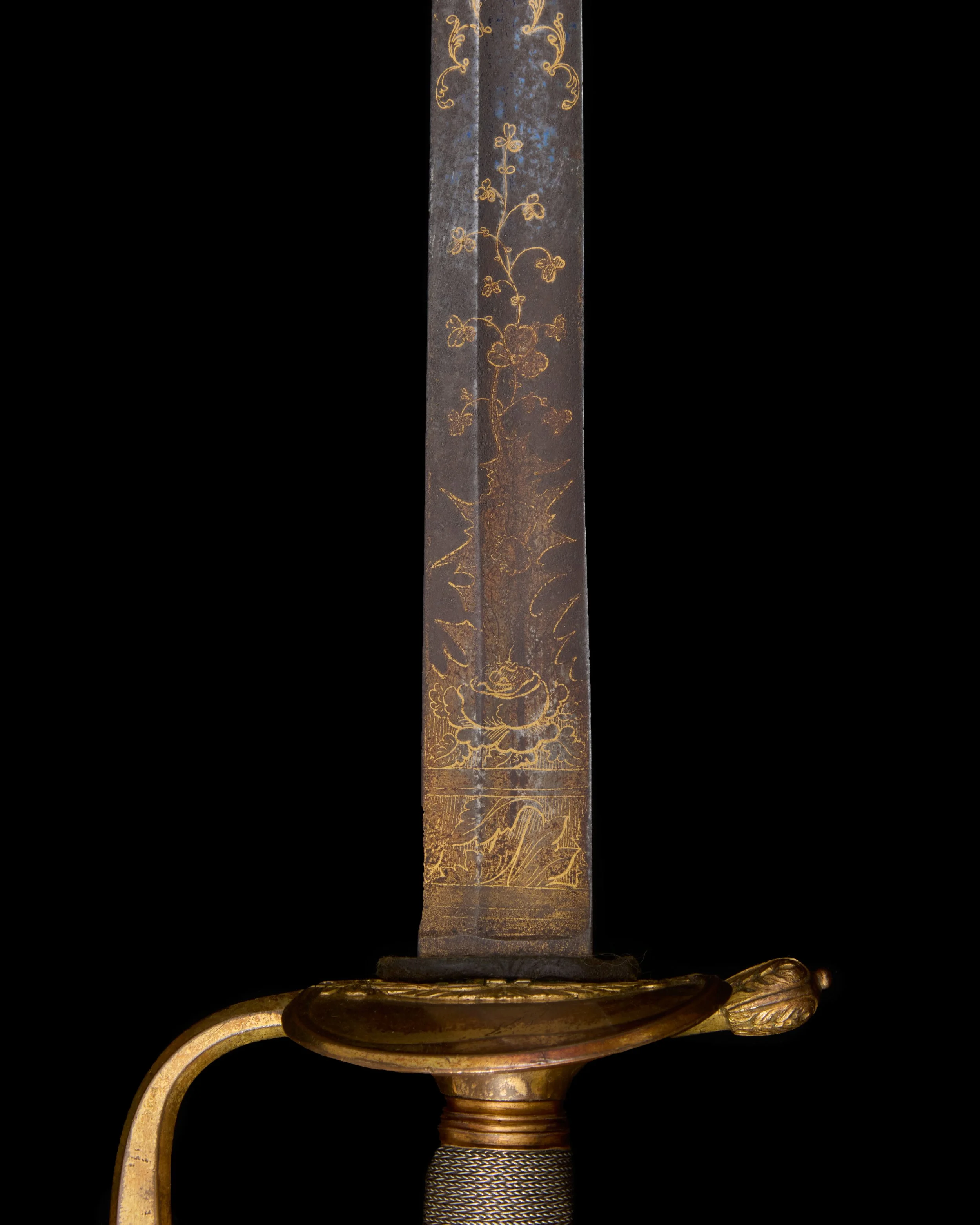 Image 5 of 5
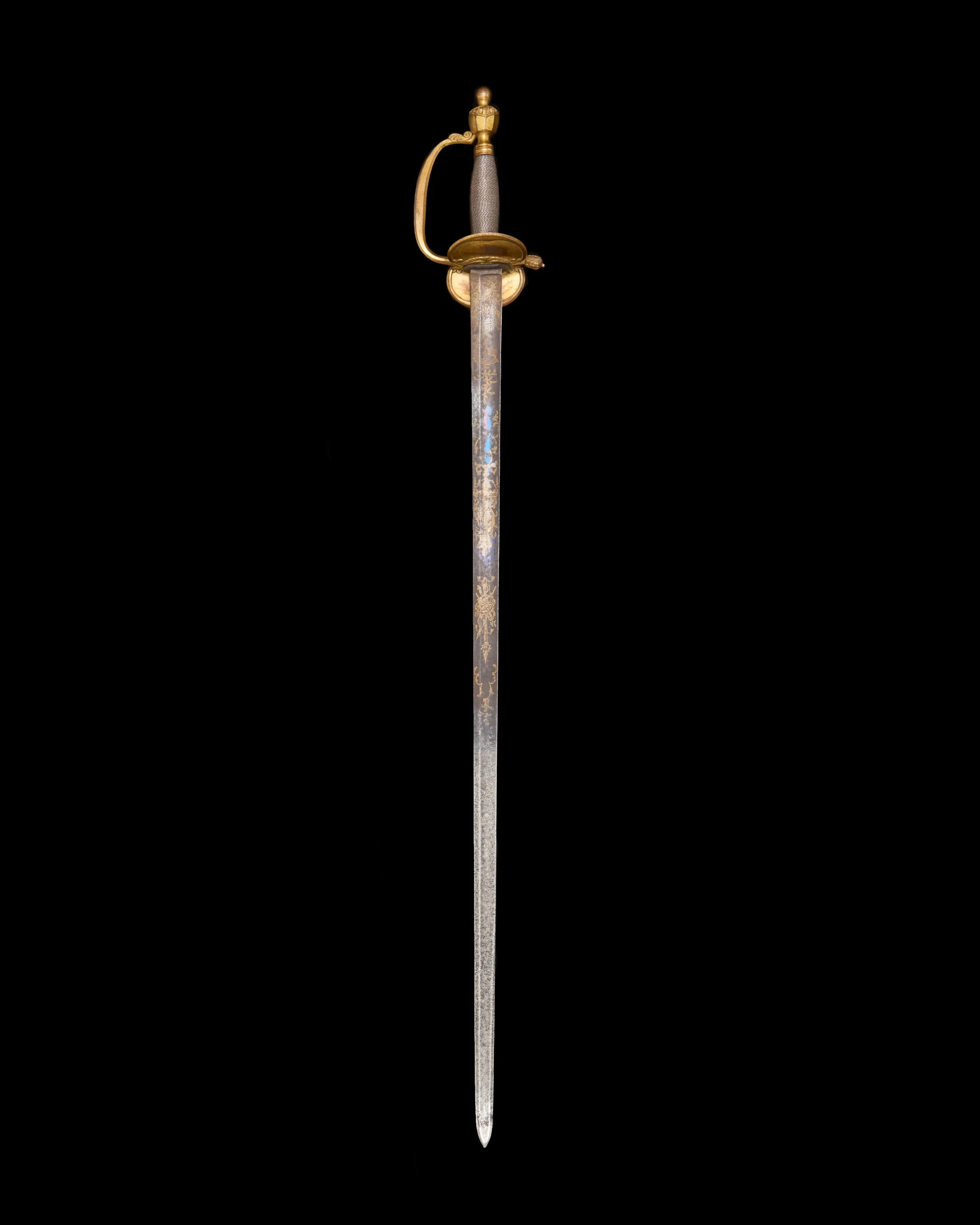
Introduced by General Order in 1796, replacing the previous 1786 pattern. These swords would have seen action during the early years of the Peninsular War and the wars in India before being partially replaced in 1803. Eventually going out of service in 1822. They were prescribed for infantry and field (foot) artillery officers, with sergeants carrying a simpler and unadorned version of the same sword
This sword weighs in at an impressive 900g, possibly the heaviest 1796 pattern I have come across. It is engraved with floral motifs and King George III cypher below a crown. The observe is engraved with floral motifs, trophies of arms and the Royal coat of arms and the motto bracketed with crescent moons. The majority blue and gilt remaining, although dulled. It has the standard folding guard
D-shaped knuckle bow, urn pommel and silver grip wire.The blade and handle are solid with no movement