A 1796 British light cavalry sword. Possibly one of the most famous styles of sabre in British military history. The 1796 light cavalry sabre was first used against Napoleon before being adopted by the Prussians
The 32in curved blade is free from and pitting or patina. The scabbard and hilt have a light, even, patina with no movement or looseness. The blade spine is unsigned, unusual for these swords, possibly meaning it was used by the volunteer or militia regiments rather than for the regular army.
Major John Gaspard le Marchant worked with Henry Osborne to research and develop the pattern. Marchant was also eager to establish rules for its proper use. He wrote the first official book on the use of the sword by British cavalry, the '1796 Rules and Regulations for the Sword Exercise of the Cavalry.' Laying out a system based around six cuts and eight parries, it was designed to provide a foundation for any type of engagement

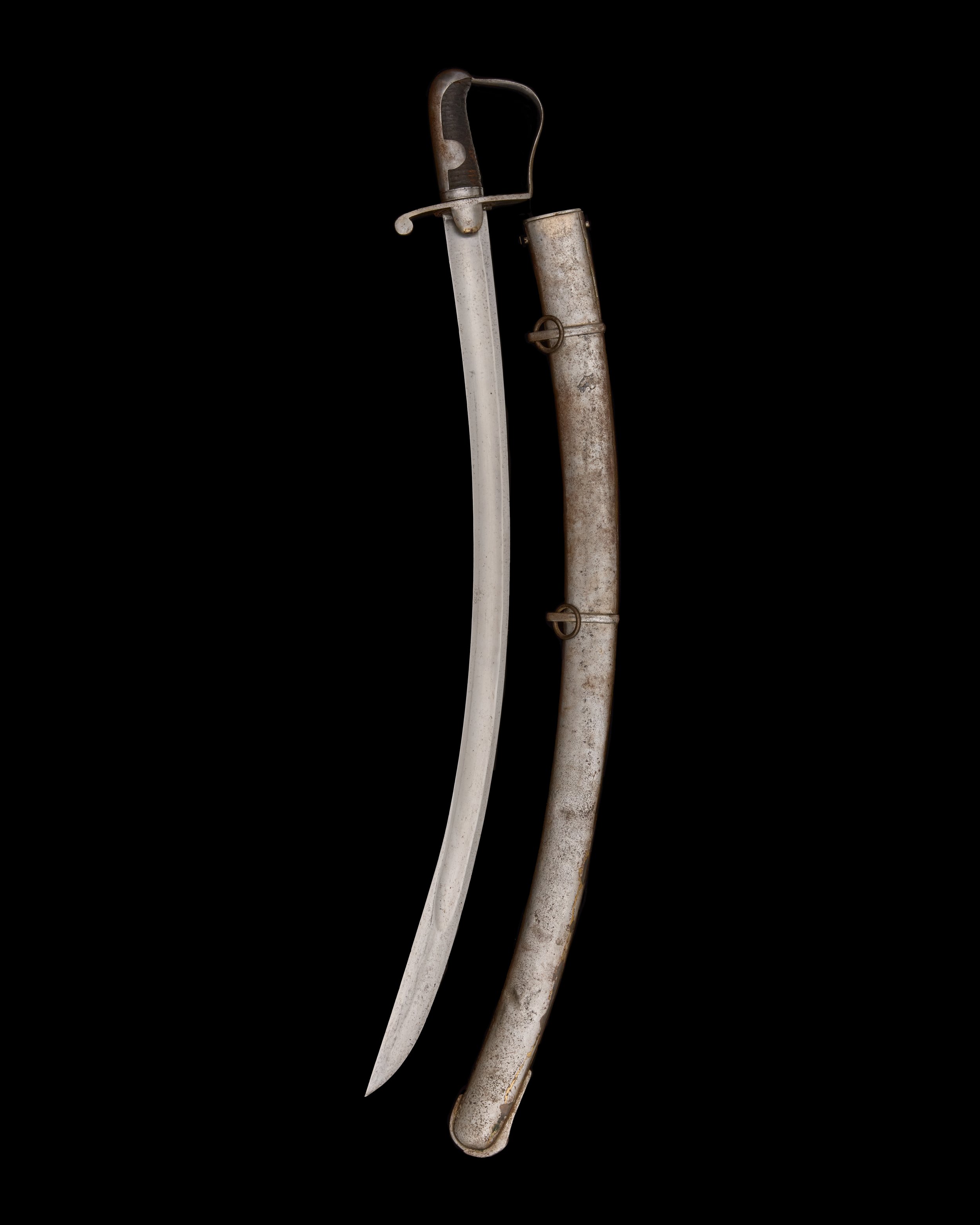 Image 1 of 6
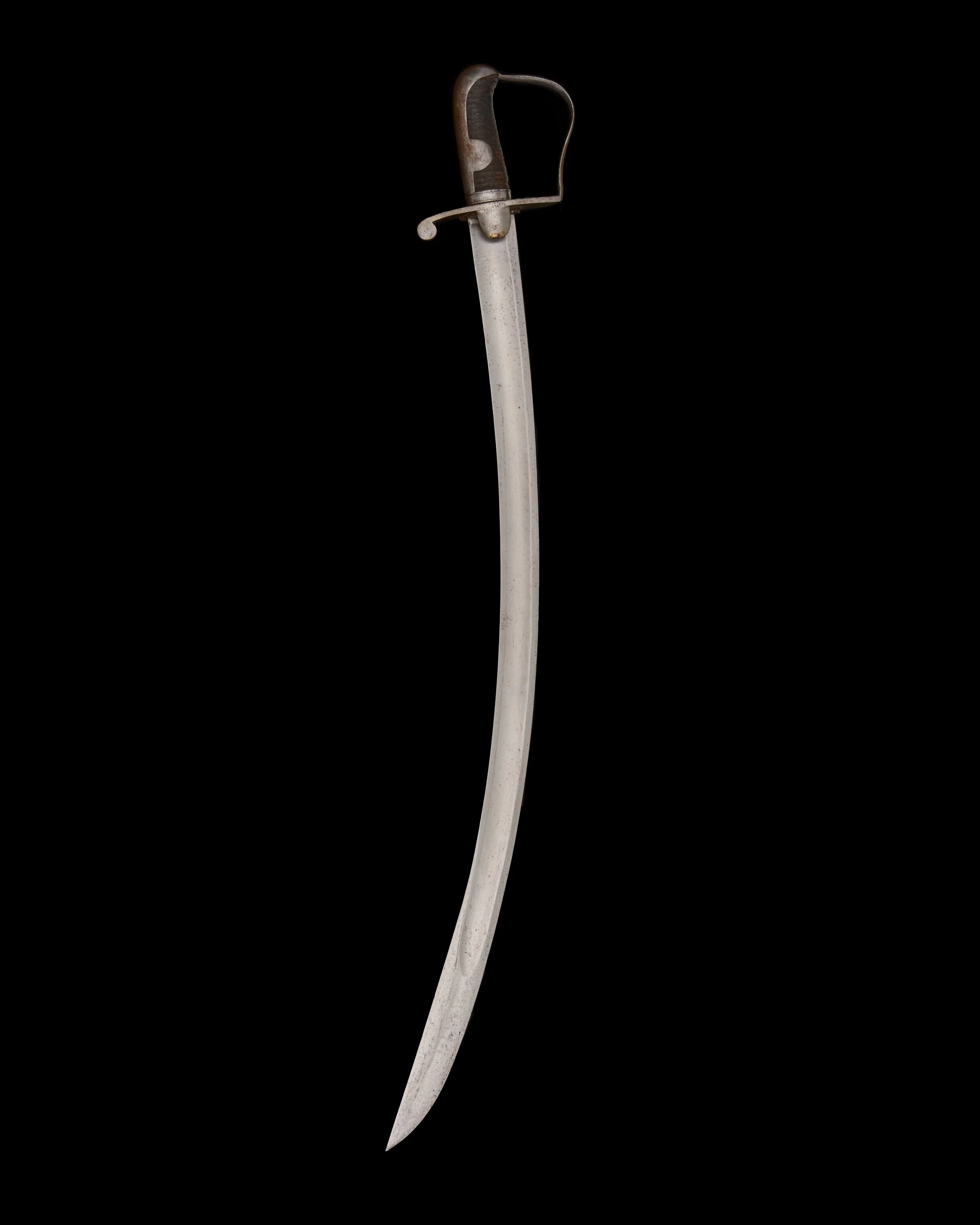 Image 2 of 6
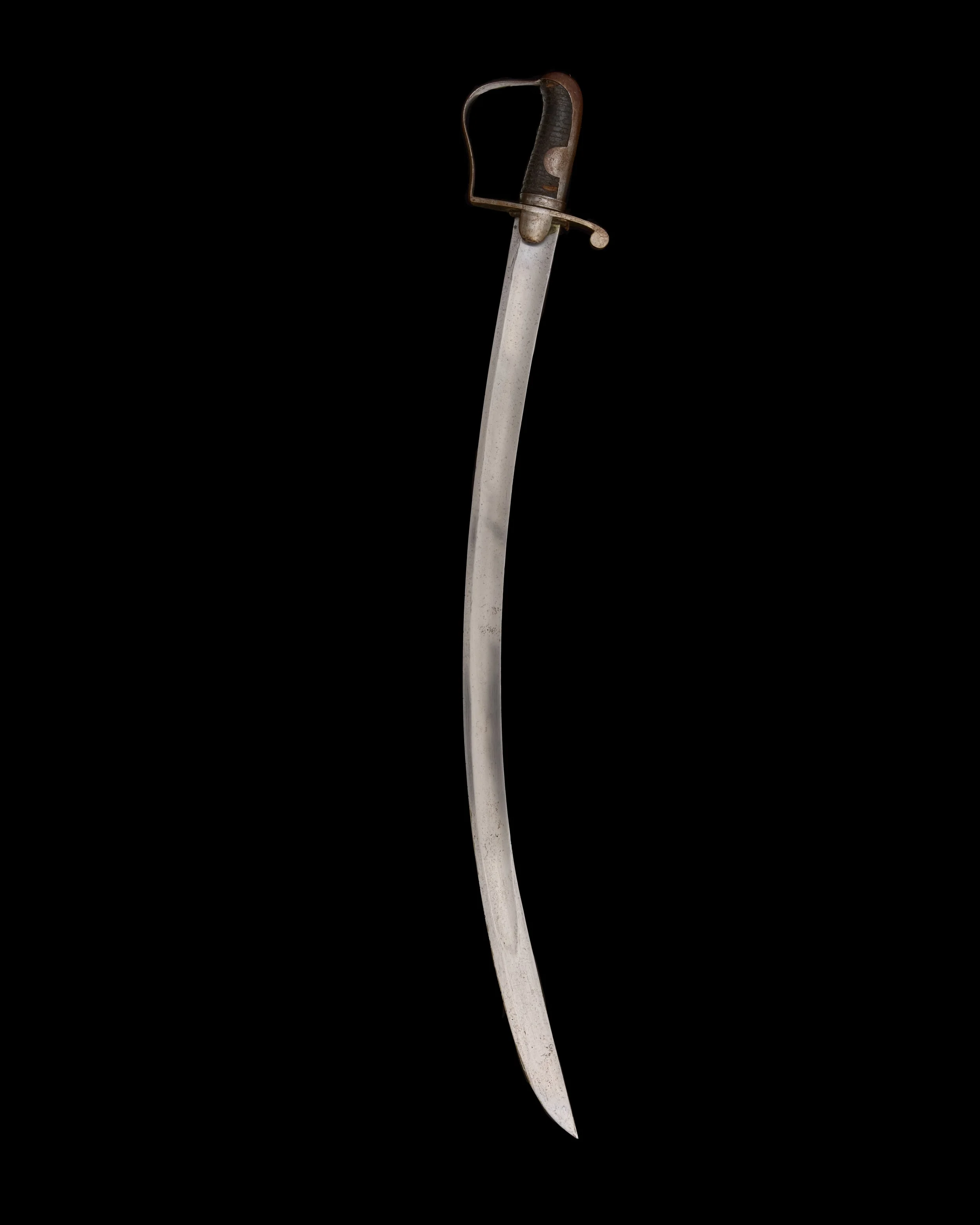 Image 3 of 6
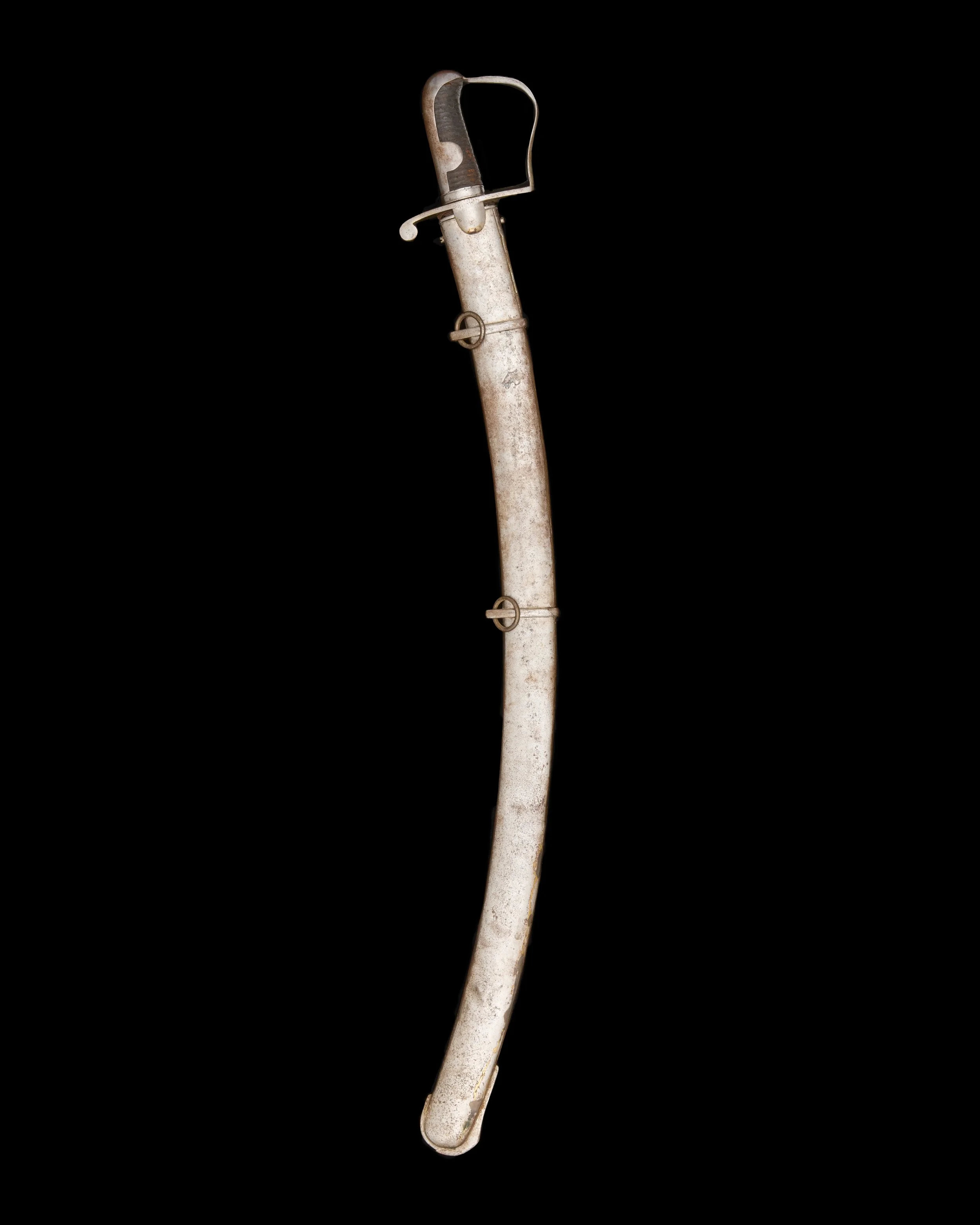 Image 4 of 6
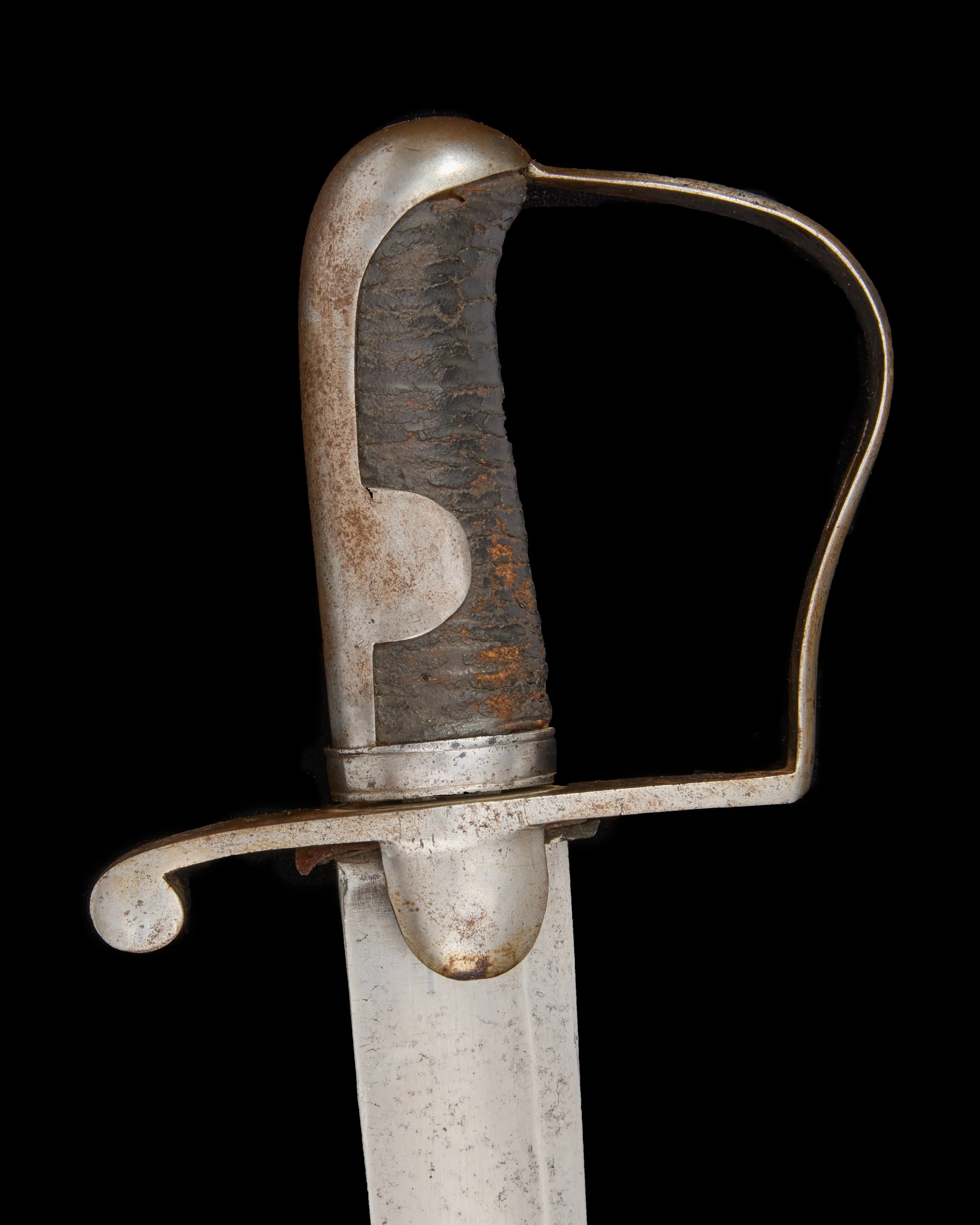 Image 5 of 6
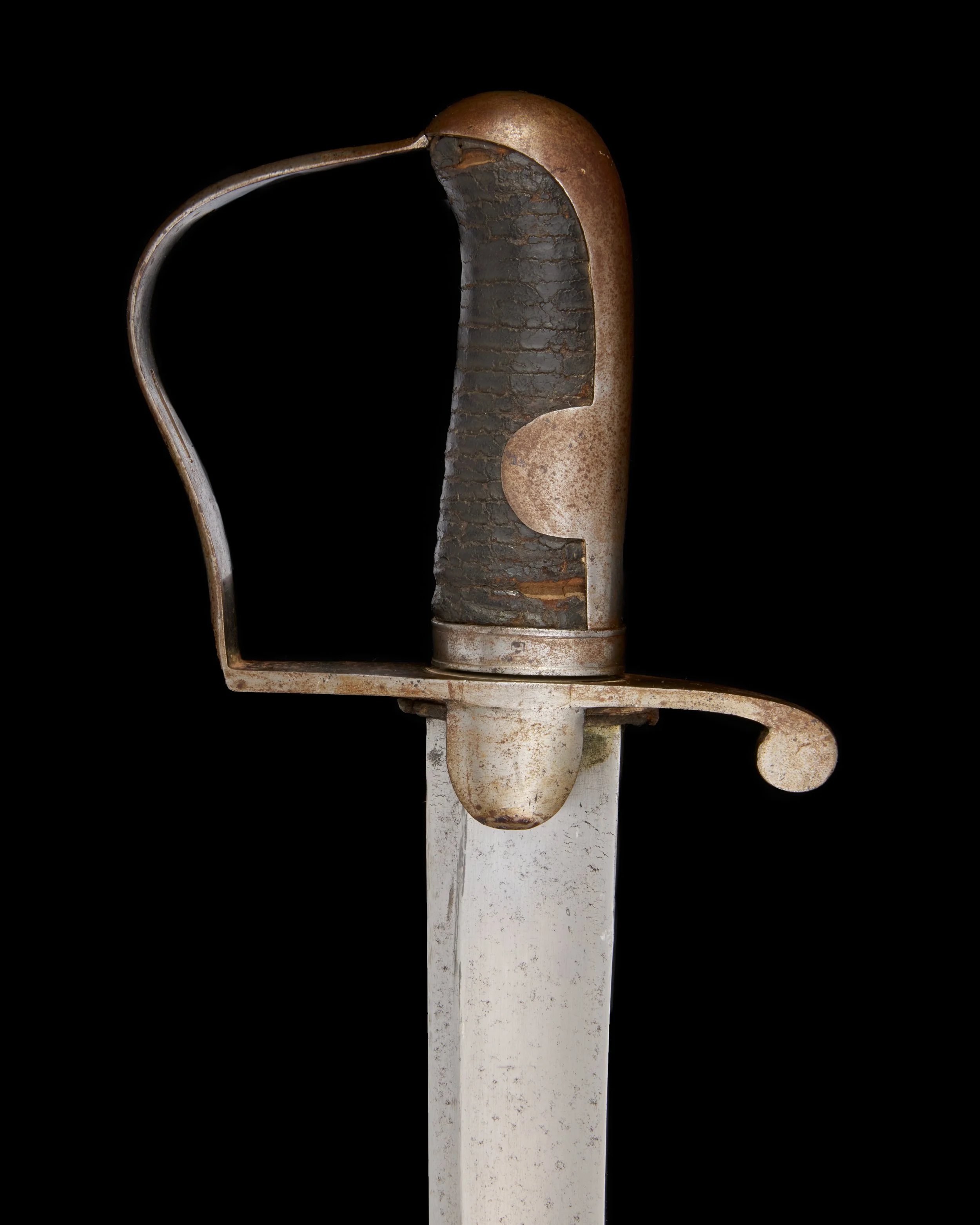 Image 6 of 6