
 Image 1 of 4
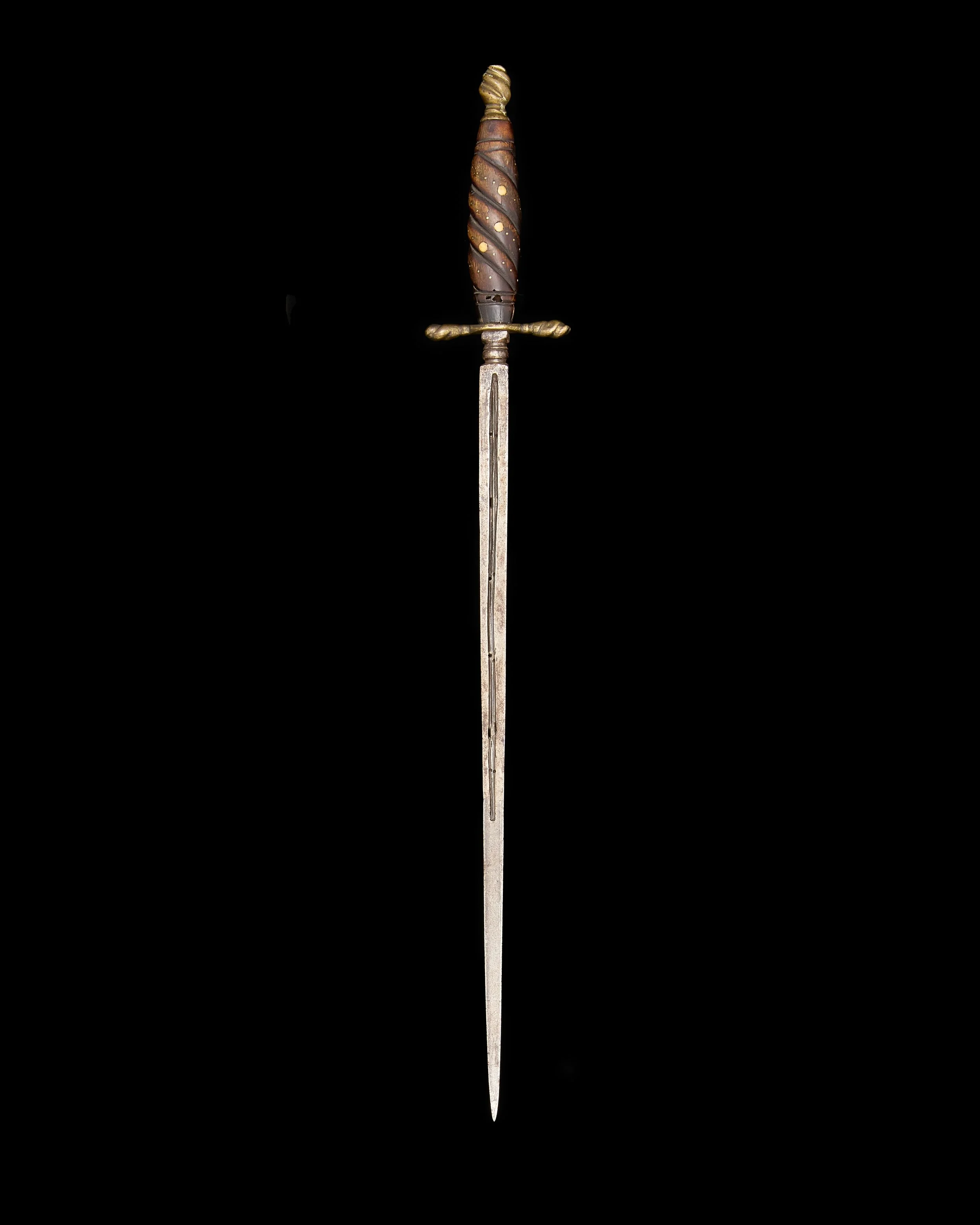 Image 2 of 4
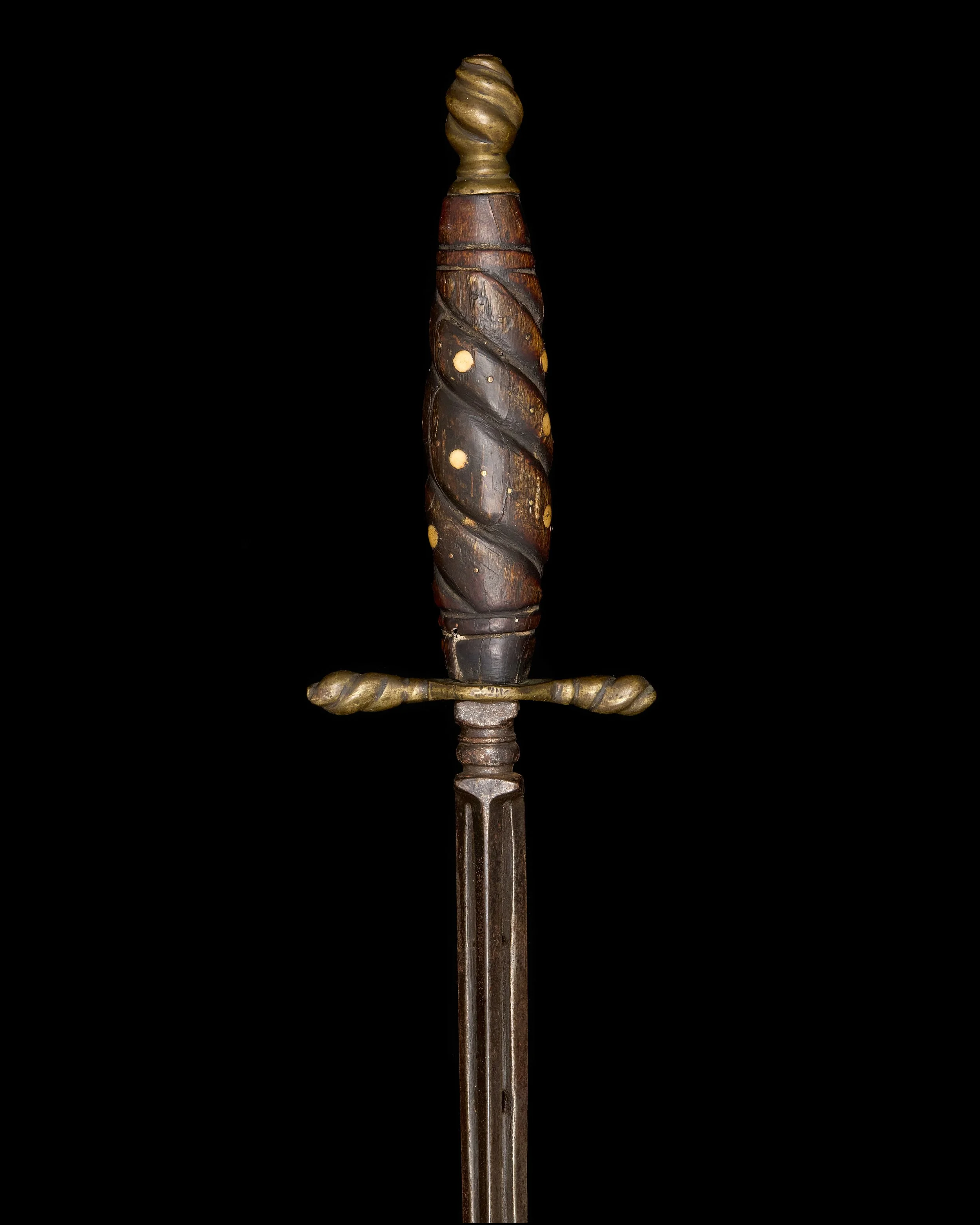 Image 3 of 4
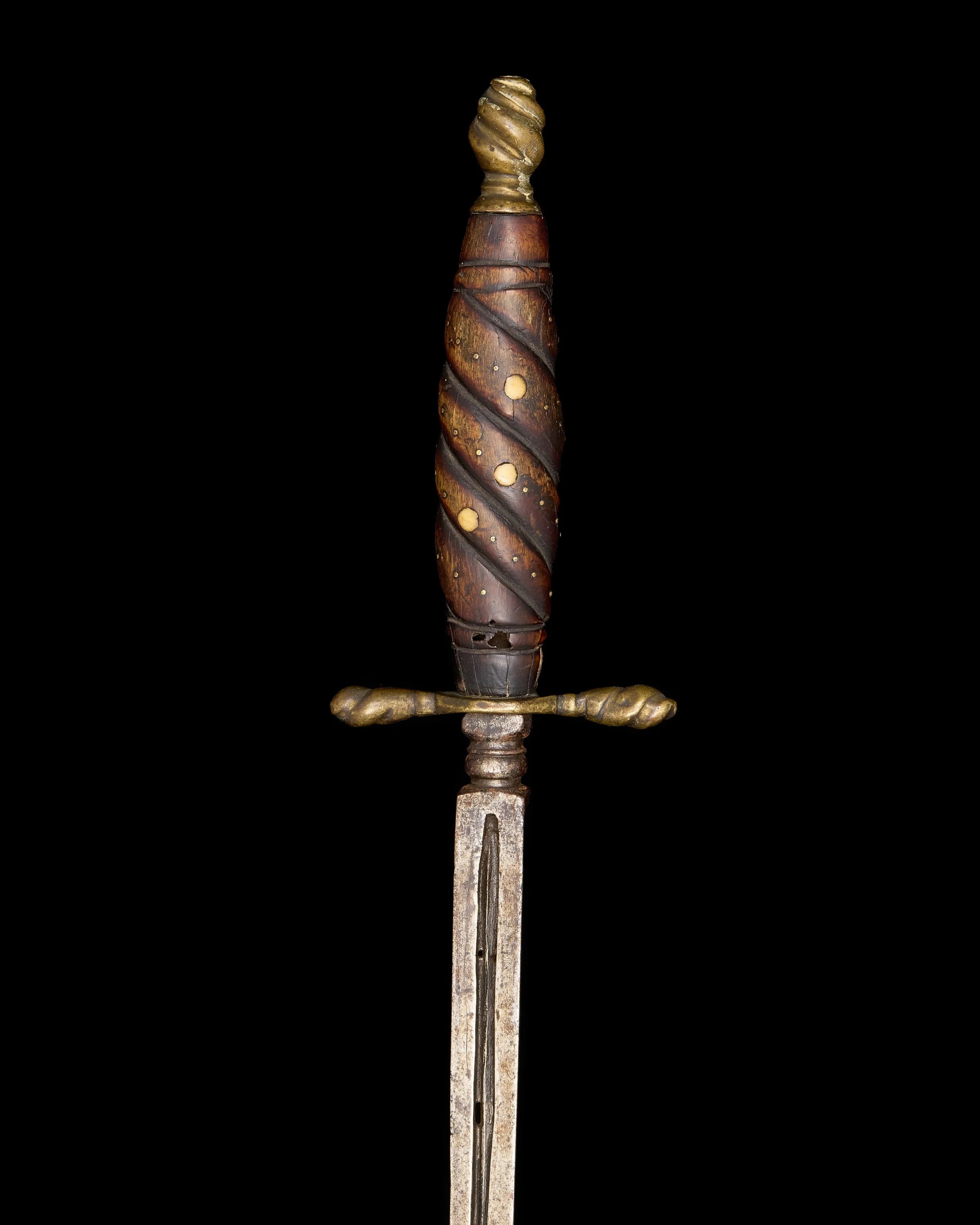 Image 4 of 4
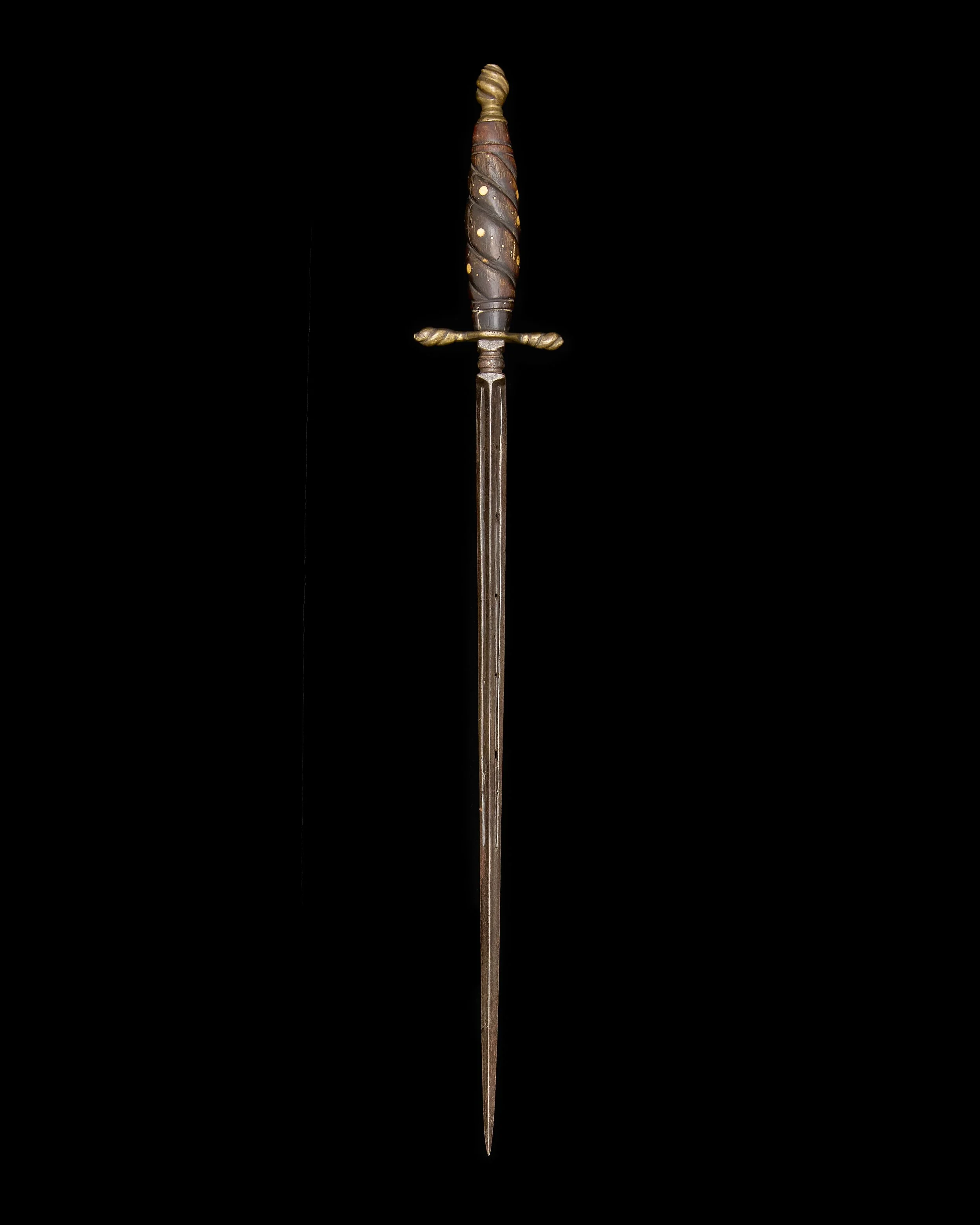
A massive stiletto dating to the 17th century. The tapering blade of triangular section forged with deep fullers and distinctive pierced decorative holes, with molded baluster-shaped forte. A pleasing overall greyish patina, with no rust or pitting. Attractive swirling dark hardwood grip embellished with small bone rondels and brass pins, crowned by a spirally-molded pommel and fitted with matching brass quillons.
Full Length 56cm Blade Length 40
First developed in Italy, the stiletto dates from the late 15th century, and is thought to be a development of the rondel dagger or misericordia, a needle-pointed weapon with a narrow blade designed primarily for thrusting, though possessing cutting edges. Early stilettos normally used a one-piece cast-metal handle which was shaped and turned on a lathe. The stiletto blade was usually hammer-forged into a dense rod with a narrow, triangular cross section, without any sharpened edges. However, other examples of the period have emerged bearing round, square, or diamond cross sections.
A massive stiletto dating to the 17th century. The tapering blade of triangular section forged with deep fullers and distinctive pierced decorative holes, with molded baluster-shaped forte. A pleasing overall greyish patina, with no rust or pitting. Attractive swirling dark hardwood grip embellished with small bone rondels and brass pins, crowned by a spirally-molded pommel and fitted with matching brass quillons.
Full Length 56cm Blade Length 40
First developed in Italy, the stiletto dates from the late 15th century, and is thought to be a development of the rondel dagger or misericordia, a needle-pointed weapon with a narrow blade designed primarily for thrusting, though possessing cutting edges. Early stilettos normally used a one-piece cast-metal handle which was shaped and turned on a lathe. The stiletto blade was usually hammer-forged into a dense rod with a narrow, triangular cross section, without any sharpened edges. However, other examples of the period have emerged bearing round, square, or diamond cross sections.